𝗧𝗵𝗲 𝗘𝘂𝗿𝗼𝗽𝗲𝗮𝗻 𝗿𝗲𝘀𝗶𝗱𝗲𝗻𝘁𝗶𝗮𝗹 𝗯𝗮𝘁𝘁𝗲𝗿𝘆 𝗺𝗮𝗿𝗸𝗲𝘁 𝗶𝘀 𝗯𝗲𝗰𝗼𝗺𝗶𝗻𝗴 𝗲𝗮𝘀𝗶𝗲𝗿 𝘁𝗼 𝗲𝗻𝘁𝗲𝗿 𝗰𝗼𝗺𝗺𝗲𝗿𝗰𝗶𝗮𝗹𝗹𝘆.
➡️ 𝗙𝗿𝗼𝗺 𝗙𝗲𝗯𝗿𝘂𝗮𝗿𝘆 𝟮𝟬𝟮𝟳, 𝗶𝘁 𝘄𝗶𝗹𝗹 𝗮𝗹𝘀𝗼 𝗯𝗲𝗰𝗼𝗺𝗲 𝗵𝗮𝗿𝗱𝗲𝗿 𝘁𝗼 𝗲𝗻𝘁𝗲𝗿 𝗰𝗮𝘀𝘂𝗮𝗹𝗹𝘆.
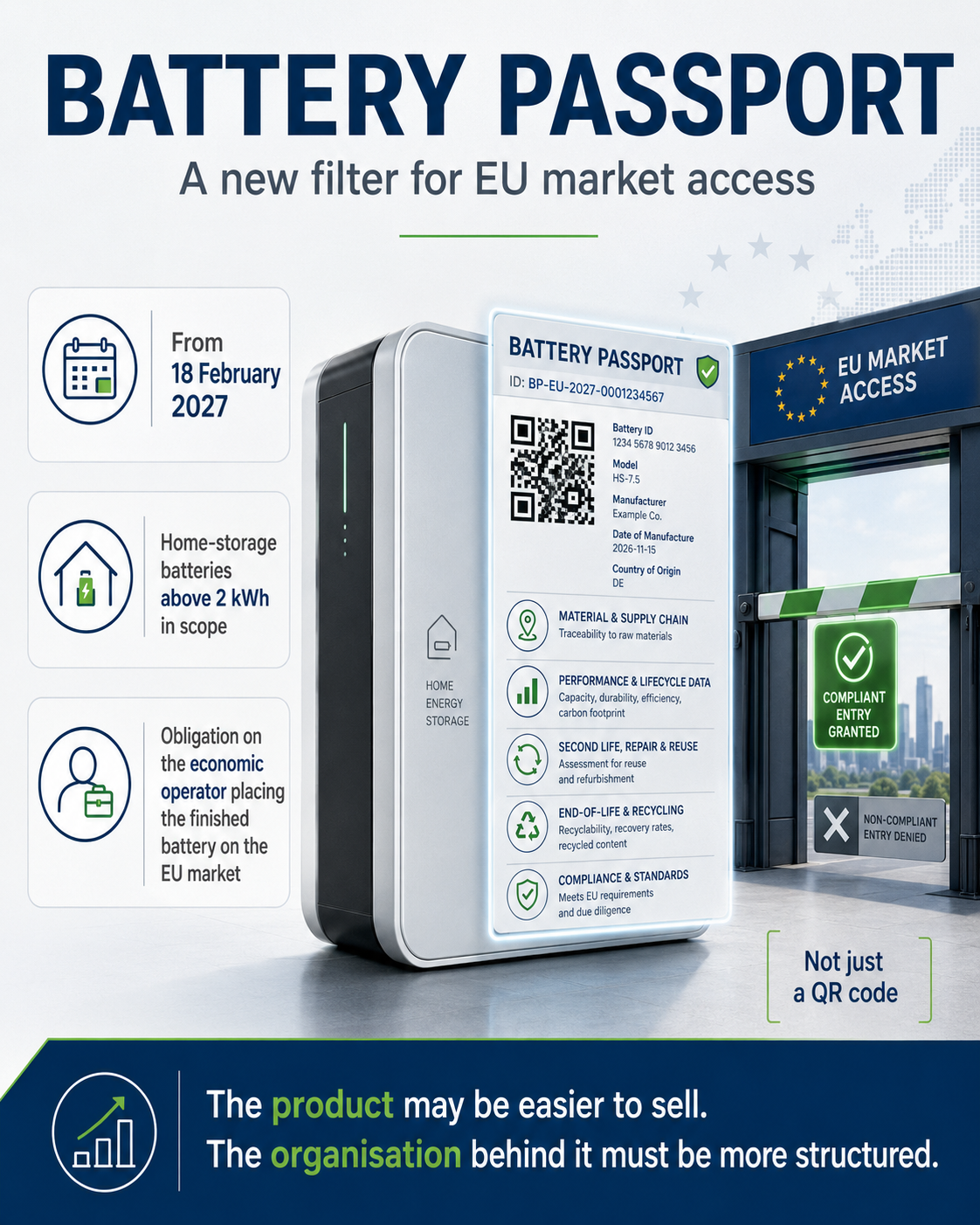
Under the 𝗘𝗨 𝗕𝗮𝘁𝘁𝗲𝗿𝘆 𝗥𝗲𝗴𝘂𝗹𝗮𝘁𝗶𝗼𝗻, industrial batteries 𝗮𝗯𝗼𝘃𝗲 𝟮 𝗸𝗪𝗵 placed on the European market will require a digital battery passport.
➡️ That includes home-storage batteries.
The passport is not simply another QR code attached to the product.
It introduces a structured digital record covering information such as battery identification, technical characteristics, performance and durability, sustainability, and information supporting repair, reuse and recycling.
And there is an important detail.
➡️ The obligation does not sit only with the battery manufacturer somewhere upstream in the supply chain.
➡️ It sits with the economic operator placing the finished battery on the EU market.
This matters precisely when residential storage is attracting more market entrants.
Low-cost AC-coupled systems, retrofit solutions, subscription batteries and new direct-to-consumer propositions are progressively reducing the commercial barriers to entry.
But European market access is moving in the opposite direction.
➡️ The product may become easier to sell.
➡️ The organisation behind the product will need to become more structured.
Data availability, traceability, lifecycle information and regulatory responsibility will increasingly become part of the product proposition itself.
For manufacturers assessing the European market, especially through importers or distribution partners, this changes the selection criteria.
Capacity, technology and price will remain important.
➡️ But they will no longer be sufficient.
From 2027, competitiveness will increasingly depend on the ability of the organisation placing the battery on the market to support the product, its data and its regulatory obligations throughout its lifecycle.
➡️ The battery passport may appear to be another compliance requirement.
➡️ In practice, it is becoming part of the market-access architecture itself, and another filter between products that can technically be sold in Europe and organisations that are genuinely prepared to operate there.