𝗧𝗵𝗲 𝗱𝗶𝘀𝗰𝘂𝘀𝘀𝗶𝗼𝗻 𝗮𝗿𝗼𝘂𝗻𝗱 𝗖𝗢₂ 𝗮𝘃𝗮𝗶𝗹𝗮𝗯𝗶𝗹𝗶𝘁𝘆 𝗶𝘀 𝗰𝗼𝗺𝗶𝗻𝗴 𝗯𝗮𝗰𝗸 𝗮𝗴𝗮𝗶𝗻
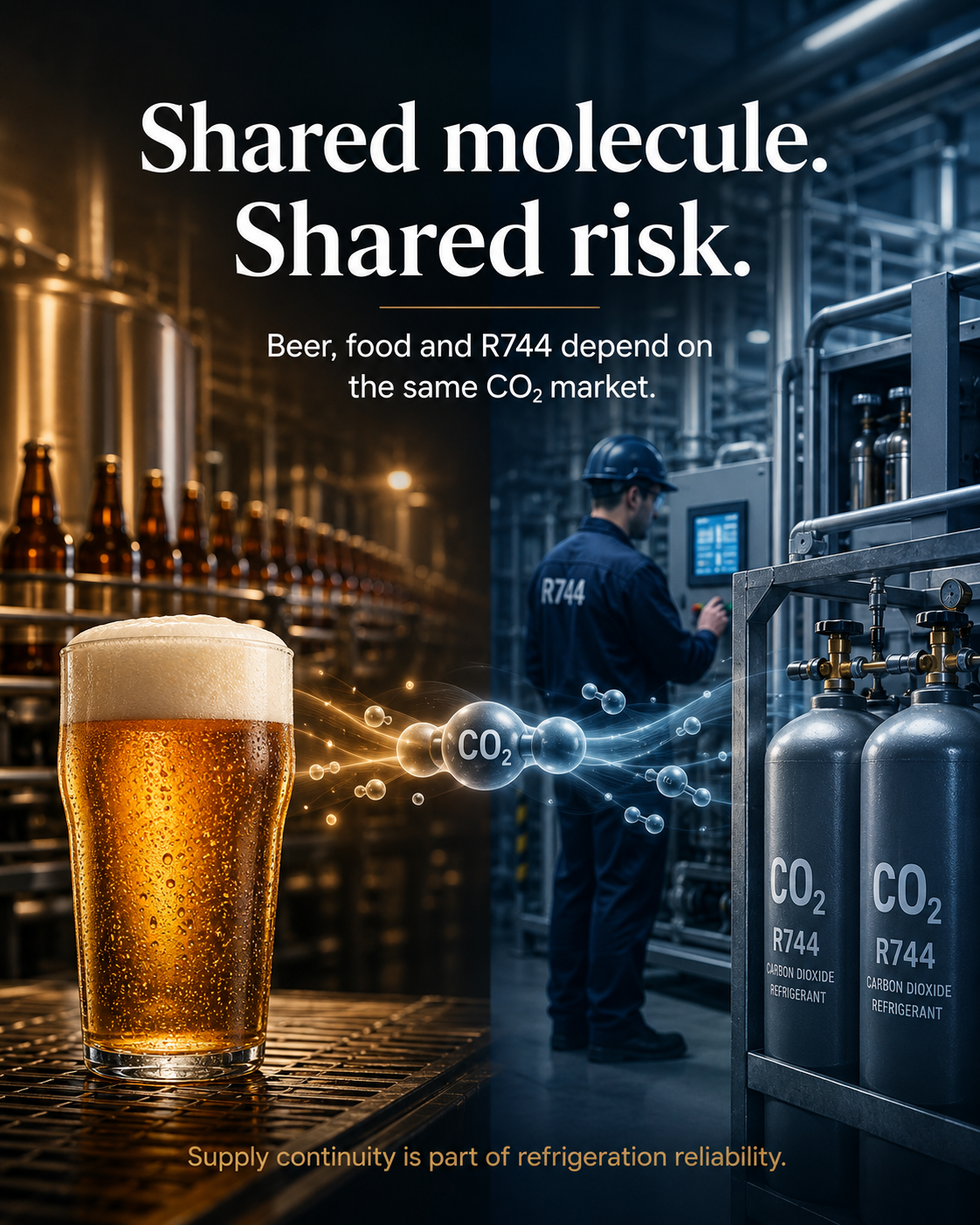

This time, the visible signal comes from the UK beer industry.
But the issue is broader than beer.
Every warm season, beverage and food industries increase their demand for CO₂.
At the same time, refrigeration systems operate under higher stress.
This gives CO₂ a particular position among natural refrigerants.
It is not only a refrigerant choice.
It is also part of an industrial gas market shared with other sectors.
For R744 systems, the problem is not daily consumption.
A CO₂ refrigeration system does not use refrigerant like fuel.
The risk appears when something goes wrong:
a leak, a safety discharge, a commissioning delay, a major repair, a restart after maintenance.
At that moment, CO₂ is no longer only a “natural refrigerant”.
It becomes a critical input for business continuity.
This is the point many discussions around R744 still understate.
The regulatory case for CO₂ is strong.
The technical case is strong.
But the operational case also depends on:
✔️ gas availability
✔️ delivery priority
✔️ cylinder and frame logistics
✔️ local service capacity
✔️ emergency procedures
✔️ restart readiness
So the question is not whether CO₂ refrigeration is a good solution.
The question is whether operators are treating CO₂ availability as part of refrigeration reliability.
𝗕𝗲𝗰𝗮𝘂𝘀𝗲 𝘁𝗵𝗲 𝗿𝗲𝗮𝗹 𝗿𝗶𝘀𝗸 𝗶𝘀 𝗻𝗼𝘁 𝗰𝗵𝗼𝗼𝘀𝗶𝗻𝗴 𝗖𝗢₂.
𝗧𝗵𝗲 𝗿𝗲𝗮𝗹 𝗿𝗶𝘀𝗸 𝗶𝘀 𝘁𝗿𝗲𝗮𝘁𝗶𝗻𝗴 𝗖𝗢₂ 𝗮𝘀 𝗶𝗳 𝘁𝗵𝗲 𝗿𝗲𝗳𝗿𝗶𝗴𝗲𝗿𝗮𝗻𝘁 𝘁𝗿𝗮𝗻𝘀𝗶𝘁𝗶𝗼𝗻 𝗵𝗮𝗱 𝗻𝗼 𝘀𝘂𝗽𝗽𝗹𝘆-𝗰𝗵𝗮𝗶𝗻 𝗰𝗼𝗻𝘀𝗲𝗾𝘂𝗲𝗻𝗰𝗲𝘀.