𝗧𝗵𝗲 𝗙𝗿𝗲𝗻𝗰𝗵 𝗿𝗲𝘀𝗶𝗱𝗲𝗻𝘁𝗶𝗮𝗹 𝗣𝗩 𝗺𝗮𝗿𝗸𝗲𝘁 𝗶𝘀 𝗶𝗻𝗰𝗿𝗲𝗮𝘀𝗶𝗻𝗴𝗹𝘆 𝗯𝗲𝗶𝗻𝗴 𝗱𝗲𝘀𝗶𝗴𝗻𝗲𝗱 𝗮𝗿𝗼𝘂𝗻𝗱 𝗮𝘂𝘁𝗼𝗰𝗼𝗻𝘀𝘂𝗺𝗽𝘁𝗶𝗼𝗻.

This changes more than the configuration of the installation.
The traditional proposition was relatively linear:
Panels, inverter, installation and grid connection.
The emerging proposition includes load control, EV charging, batteries, dynamic tariffs and digital energy management.
But this evolution is not creating one unified market.
➡️ It is creating two.
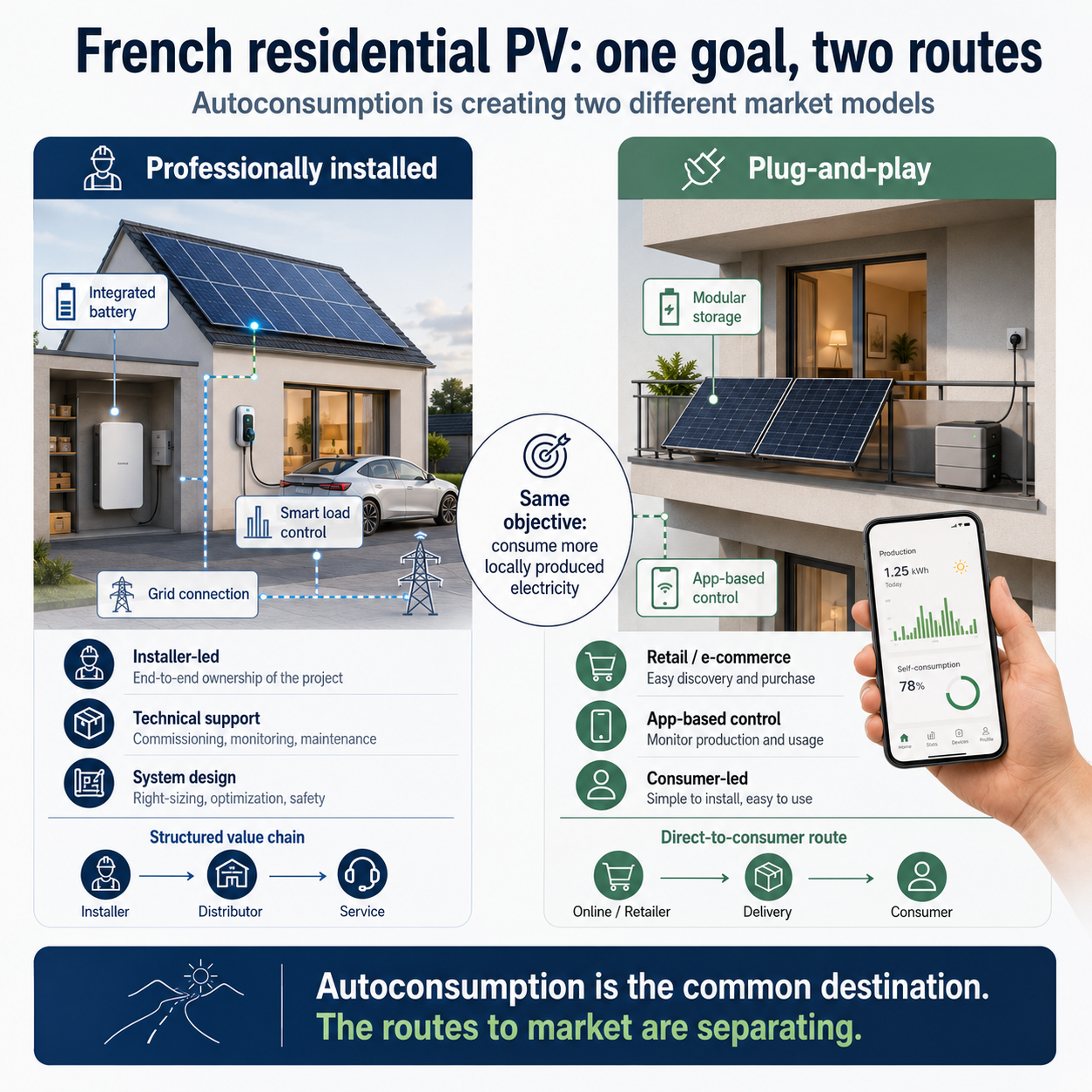
The first remains professionally designed and installed.
The battery is integrated into the electrical system, sized according to the consumption profile and supported by installers, technical distributors and specialised partners.
The second is developing around modular and plug-and-play solutions.
Products are purchased through retail or digital channels, connected to balcony PV or existing residential systems, and managed through applications.
Both models pursue the same objective:
increasing the share of locally produced electricity consumed by the household.
But their commercial architecture is different.
➡️ They do not require the same distributors.
➡️ They do not place responsibility at the same point in the value chain.
➡️ They do not require the same technical support, installation process or customer education.
For manufacturers, the question is therefore no longer only whether they have a competitive battery.
It is whether their product, service organisation and distribution channel are designed for the market they are actually entering.
Autoconsumption may be the common destination.
The routes to market are already separating.
‼️Expansion is not acceleration. It is architecture.
You should also read:
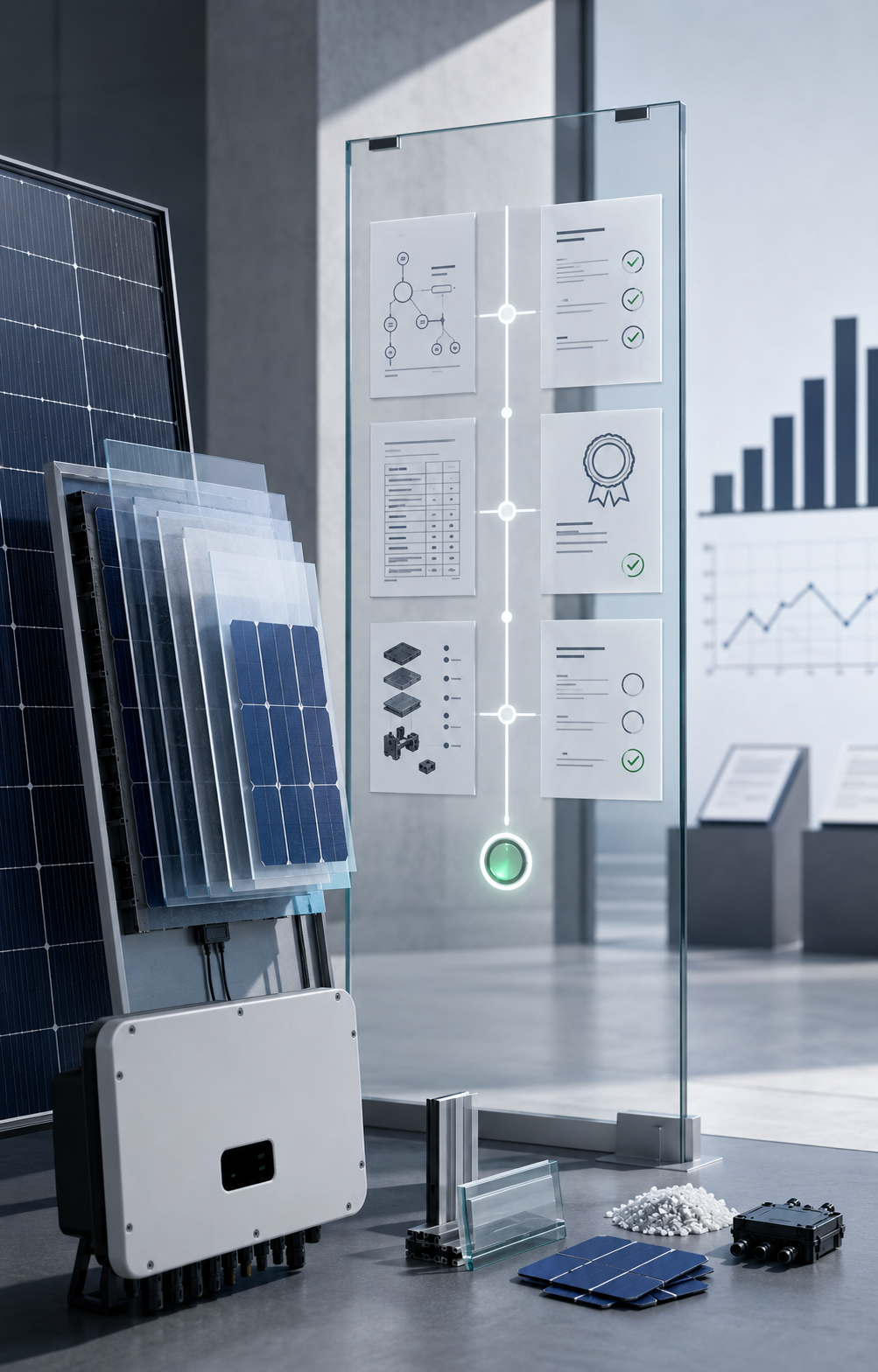
𝗘𝗻 𝗙𝗿𝗮𝗻𝗰𝗲, 𝘂𝗻 𝘀𝘆𝘀𝘁𝗲̀𝗺𝗲 𝗽𝗵𝗼𝘁𝗼𝘃𝗼𝗹𝘁𝗮𝗶𝗾𝘂𝗲 𝗽𝗲𝘂𝘁 𝗱𝗲́𝘀𝗼𝗿𝗺𝗮𝗶𝘀 𝗲̂𝘁𝗿𝗲 𝗰𝗼𝗺𝗽𝗲́𝘁𝗶𝘁𝗶𝗳 𝗲𝗻 𝗽𝗿𝗶𝘅, 𝗽𝗲𝗿𝗳𝗼𝗿𝗺𝗮𝗻𝘁 𝘀𝘂𝗿 𝗹𝗲 𝗽𝗹𝗮𝗻 𝘁𝗲𝗰𝗵𝗻𝗶𝗾𝘂𝗲 𝗲𝘁 𝗽𝗼𝘂𝗿𝘁𝗮𝗻𝘁 𝗻𝗲 𝗽𝗮𝘀 𝗲̂𝘁𝗿𝗲 𝗲́𝗹𝗶𝗴𝗶𝗯𝗹𝗲 𝗮 𝗰𝗲𝗿𝘁𝗮𝗶𝗻𝘀 𝗮𝗽𝗽𝗲𝗹𝘀 𝗱’𝗼𝗳𝗳𝗿𝗲𝘀.
En 𝗷𝘂𝗶𝗹𝗹𝗲𝘁 𝟮𝟬𝟮𝟲, la France a intégré des critères de résilience de la chaîne d’approvisionnement dans les appels d’offres concernant certaines installations photovoltaïques sur bâtiments et au sol. ➡️ Le système ne peut pas être assemblé dans le pays tiers dominant, actuellement la Chine pour…
Continue reading...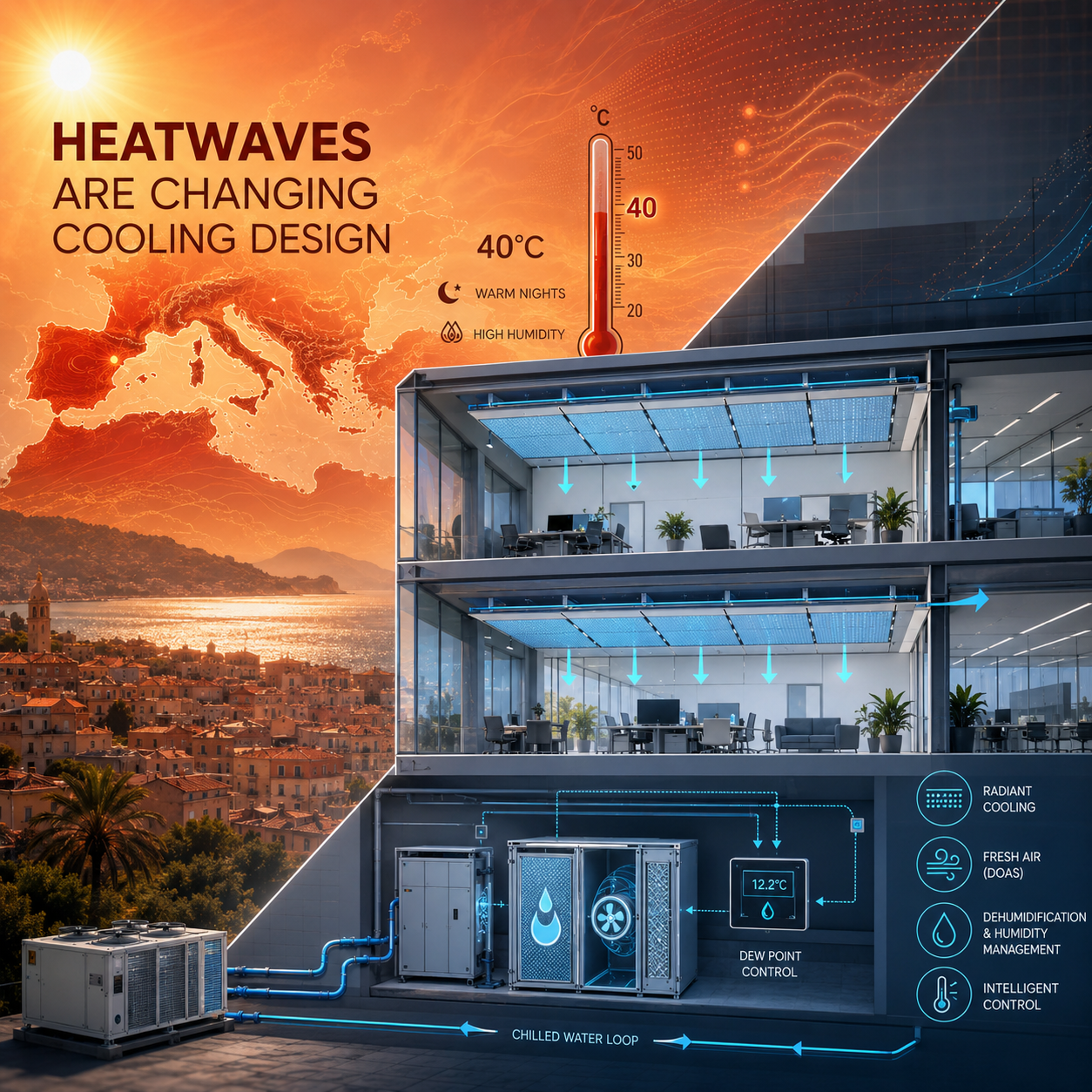
𝗖𝗼𝗼𝗹𝗶𝗻𝗴 𝗱𝗲𝘀𝗶𝗴𝗻 𝗶𝗻 𝗦𝗼𝘂𝘁𝗵𝗲𝗿𝗻 𝗘𝘂𝗿𝗼𝗽𝗲 𝗶𝘀 𝗲𝗻𝘁𝗲𝗿𝗶𝗻𝗴 𝗮 𝗱𝗶𝗳𝗳𝗲𝗿𝗲𝗻𝘁 𝗽𝗵𝗮𝘀𝗲.
Not because Southern Europe has become a tropical region. But because heatwaves are exposing buildings to conditions that were less central in the past: ▪️ high outdoor temperatures, ▪️ warmer nights, ▪️ stronger solar loads, ▪️ higher cooling peaks, ▪️ and, in some areas, more…
Continue reading...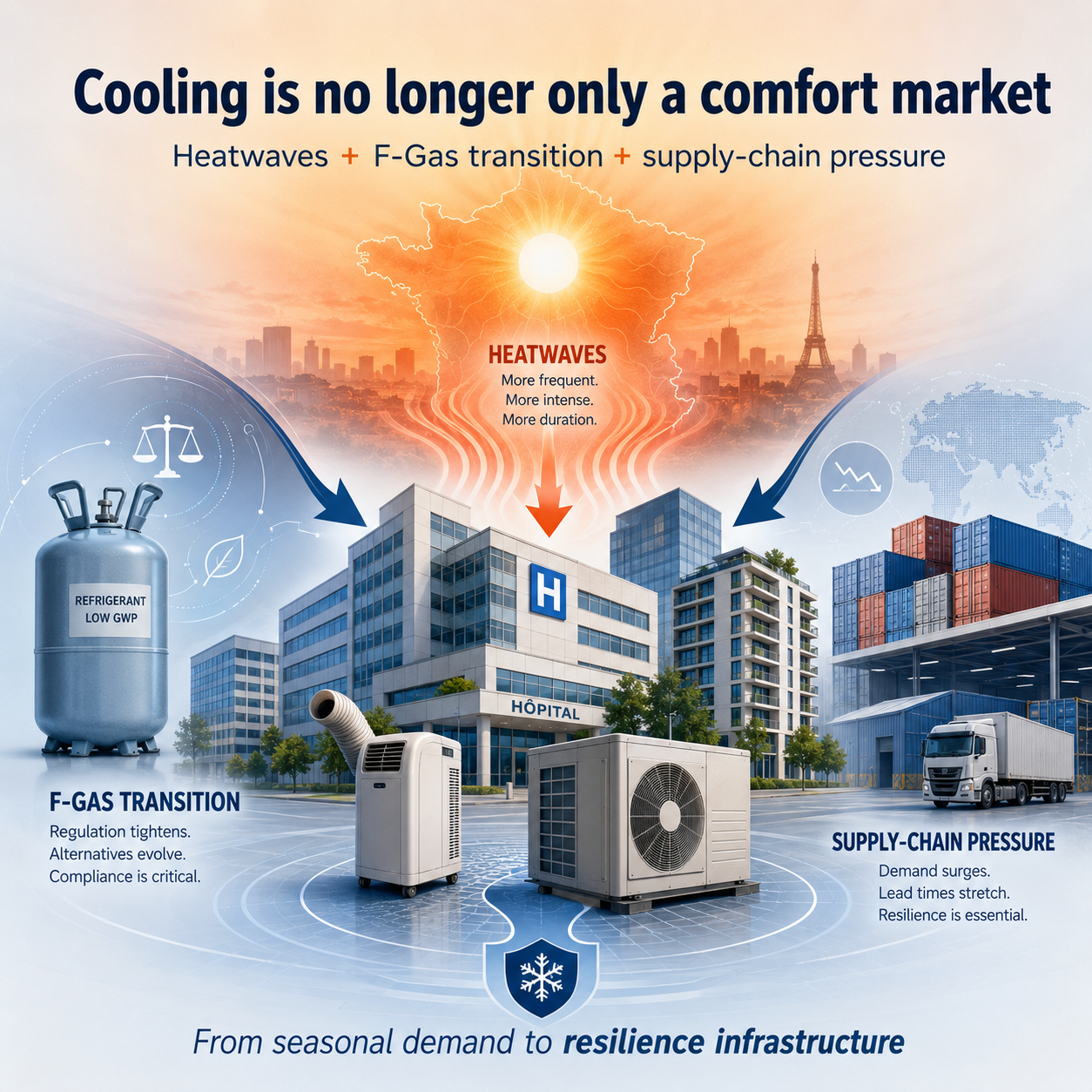
𝗟𝗲𝘀 𝗱𝗲𝗿𝗻𝗶𝗲̀𝗿𝗲𝘀 𝘃𝗮𝗴𝘂𝗲𝘀 𝗱𝗲 𝗰𝗵𝗮𝗹𝗲𝘂𝗿 𝗲𝗻 𝗙𝗿𝗮𝗻𝗰𝗲 𝗼𝗻𝘁 𝗿𝗲𝗺𝗶𝘀 𝗹𝗲 𝗿𝗲𝗳𝗿𝗼𝗶𝗱𝗶𝘀𝘀𝗲𝗺𝗲𝗻𝘁 𝗮𝘂 𝗰𝗲𝗻𝘁𝗿𝗲 𝗱𝘂 𝗱𝗲́𝗯𝗮𝘁.
Mais elles montrent aussi une contradiction importante dans le marché HVAC/R. D’un côté, le cadre F-Gas pousse le marché vers une évolution plus structurée : ▪️ des fluides à plus faible PRG, ▪️ des applications mieux contrôlées, ▪️ des compétences professionnelles renforcées, ▪️ des obligations…
Continue reading...