𝗦𝗮𝗺𝘀𝘂𝗻𝗴 𝗶𝘀 𝗿𝗲𝗽𝗼𝗿𝘁𝗲𝗱𝗹𝘆 𝘄𝗶𝘁𝗵𝗱𝗿𝗮𝘄𝗶𝗻𝗴 𝘁𝗲𝗹𝗲𝘃𝗶𝘀𝗶𝗼𝗻𝘀 𝗮𝗻𝗱 𝗺𝗮𝗷𝗼𝗿 𝗵𝗼𝘂𝘀𝗲𝗵𝗼𝗹𝗱 𝗮𝗽𝗽𝗹𝗶𝗮𝗻𝗰𝗲𝘀 𝗳𝗿𝗼𝗺 𝘁𝗵𝗲 𝗖𝗵𝗶𝗻𝗲𝘀𝗲 𝗺𝗮𝗿𝗸𝗲𝘁.
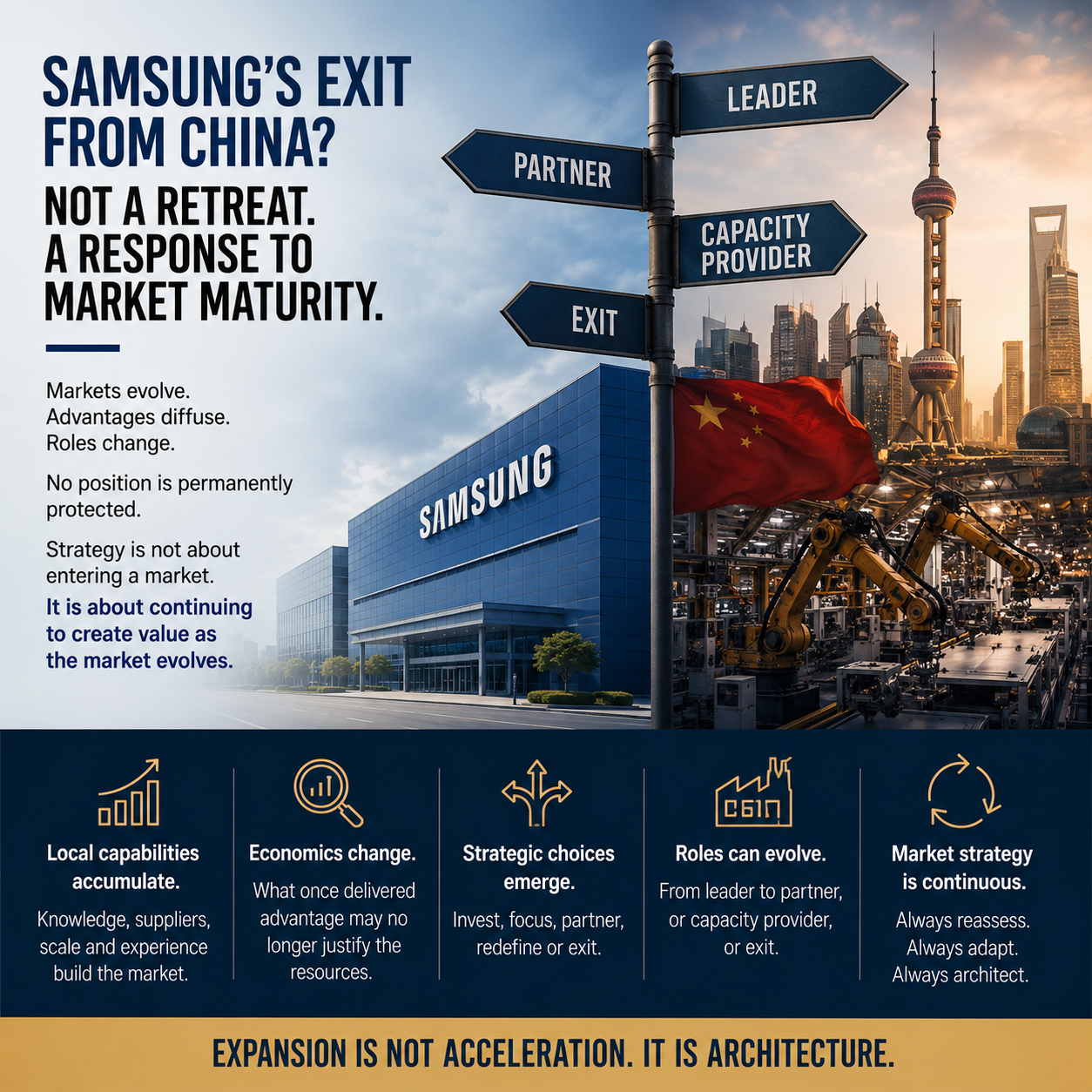

This should not be read as the decline of Samsung.
Large corporations continuously assess where their market positions remain economically defensible and where capital can create greater value elsewhere.
The more interesting signal concerns the maturity of specific segments of the Chinese market.
For years, international manufacturers entered China with clear advantages.
They contributed to the development of the market while also benefiting from its growth.
Over time, Chinese manufacturers developed their own technologies, brands, distribution networks and industrial scale.
The market changed around the foreign incumbents.
Samsung’s decision can therefore be read as a strategic response to market maturity.
Not as a loss of corporate leadership, but as the recognition that global leadership does not make every local position worth defending.
➡️ The strategic meaning of this decision goes beyond Samsung.
No market position should be considered permanently protected.
This is true in emerging markets, but also in established and mature ones.
Local production creates more than output.
It develops technical knowledge, supplier capabilities, operational experience and progressively deeper industrial competence around it.
Over time, these elements accumulate.
The local market becomes more capable, more autonomous and more demanding.
At that point, the incumbent may face a different strategic choice.
It may withdraw from activities that no longer provide an acceptable economic return, following a disciplined P&L assessment.
Or it may redefine its role, making its own production capacity available to the companies now driving the market.
This is what is currently happening in Europe’s EV mobility market.
Such a shift can preserve factories, employment and parts of the surrounding industrial ecosystem.
➡️ But it also shows that market position is never fixed.
A company may enter as the leader, remain as a partner, or eventually become part of another player’s expansion architecture.
This means that market strategy is not completed when a distribution channel is established or local production begins.
It requires continuous analysis of how the market is evolving, which capabilities are becoming local, and whether the company’s original position remains economically and strategically defensible.
‼️Expansion is not acceleration. It is architecture.