𝗦𝗼𝗺𝗲𝘁𝗵𝗶𝗻𝗴 𝗵𝗮𝘀 𝗯𝗲𝗲𝗻 𝘁𝗮𝗸𝗶𝗻𝗴 𝘀𝗵𝗮𝗽𝗲 𝗶𝗻 𝘁𝗵𝗲 𝗛𝗩𝗔𝗖 𝗺𝗮𝗿𝗸𝗲𝘁 𝗼𝘃𝗲𝗿 𝘁𝗵𝗲 𝗹𝗮𝘀𝘁 𝗳𝗲𝘄 𝗺𝗼𝗻𝘁𝗵𝘀.
It is less visible than the new products and technologies presented at recent exhibitions.
But strategically, I think it may be more important.
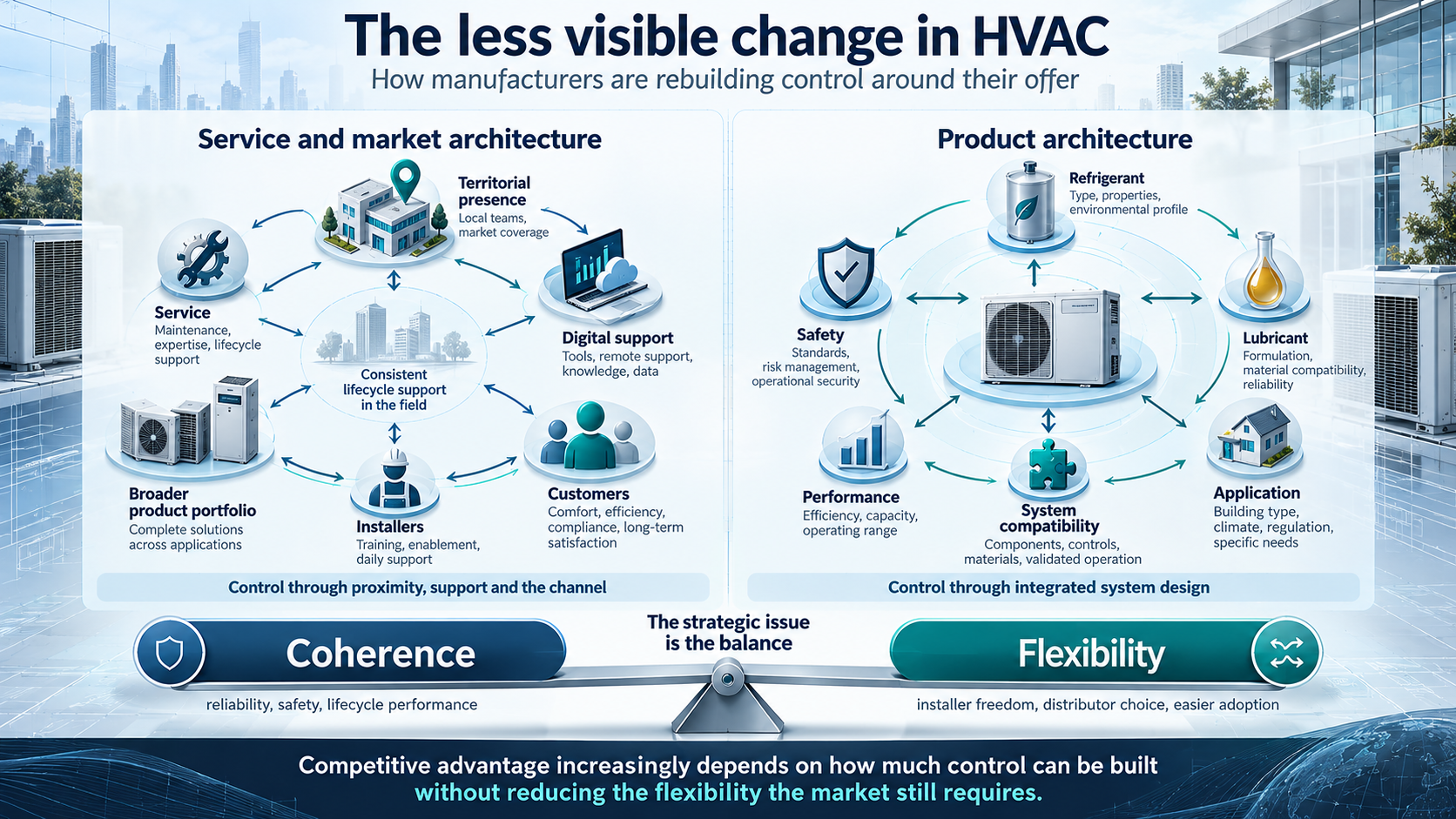
𝗠𝗮𝗻𝘂𝗳𝗮𝗰𝘁𝘂𝗿𝗲𝗿𝘀 𝗮𝗿𝗲 𝗿𝗲𝗯𝘂𝗶𝗹𝗱𝗶𝗻𝗴 𝗰𝗼𝗻𝘁𝗿𝗼𝗹 𝗮𝗿𝗼𝘂𝗻𝗱 𝘁𝗵𝗲𝗶𝗿 𝗼𝗳𝗳𝗲𝗿.
➡️ I see two movements.
The first is relatively familiar.
Manufacturers are investing more in service, territorial presence, digital support and broader product portfolios.
The objective is not only to sell equipment.
It is to stay closer to installers and customers, support the product throughout its lifecycle and create more consistency between what is designed by the manufacturer and what is actually delivered in the field.
➡️ This is control through 𝘀𝗲𝗿𝘃𝗶𝗰𝗲 𝗮𝗻𝗱 𝗺𝗮𝗿𝗸𝗲𝘁 𝗮𝗿𝗰𝗵𝗶𝘁𝗲𝗰𝘁𝘂𝗿𝗲.
The second movement is more intriguing because, in some respects, it brings back an older industrial logic.
Recent developments show manufacturers looking beyond the individual component and working on refrigerants, lubricants, system compatibility and performance as one integrated architecture.
➡️ Here, control is increasingly built into 𝘁𝗵𝗲 𝗽𝗿𝗼𝗱𝘂𝗰𝘁 𝗮𝗿𝗰𝗵𝗶𝘁𝗲𝗰𝘁𝘂𝗿𝗲 𝗶𝘁𝘀𝗲𝗹𝗳.
The more performance depends on components designed and validated together, the less neutral component substitution becomes.
That can improve reliability, safety and lifecycle performance.
But it also has consequences.
✔️ More specialisation.
✔️ More dependence on technical support.
✔️ Less flexibility for installers and distributors.
✔️ Potentially higher switching costs for the customer.
➡️ This is where the two trends meet.
One strengthens control through 𝘀𝗲𝗿𝘃𝗶𝗰𝗲, 𝗽𝗿𝗼𝘅𝗶𝗺𝗶𝘁𝘆 𝗮𝗻𝗱 𝘁𝗵𝗲 𝗰𝗵𝗮𝗻𝗻𝗲𝗹.
The other strengthens control through 𝘁𝗵𝗲 𝘁𝗲𝗰𝗵𝗻𝗶𝗰𝗮𝗹 𝗮𝗿𝗰𝗵𝗶𝘁𝗲𝗰𝘁𝘂𝗿𝗲 𝗼𝗳 𝘁𝗵𝗲 𝘀𝘆𝘀𝘁𝗲𝗺.
➡️ Neither model is automatically better.
The real strategic issue is the balance.
✔️ Too little control can weaken performance and customer experience.
✔️ Too much can create rigidity and make the offer harder to support or adopt in different markets.
For me, this is one of the most interesting changes taking place behind the current HVAC transition.
𝗖𝗼𝗺𝗽𝗲𝘁𝗶𝘁𝗶𝘃𝗲 𝗮𝗱𝘃𝗮𝗻𝘁𝗮𝗴𝗲 𝗺𝗮𝘆 𝗶𝗻𝗰𝗿𝗲𝗮𝘀𝗶𝗻𝗴𝗹𝘆 𝗱𝗲𝗽𝗲𝗻𝗱 𝗻𝗼𝘁 𝗼𝗻𝗹𝘆 𝗼𝗻 𝘁𝗵𝗲 𝗽𝗿𝗼𝗱𝘂𝗰𝘁 𝗶𝘁𝘀𝗲𝗹𝗳, 𝗯𝘂𝘁 𝗼𝗻 𝗵𝗼𝘄 𝗺𝘂𝗰𝗵 𝗰𝗼𝗻𝘁𝗿𝗼𝗹 𝗮 𝗺𝗮𝗻𝘂𝗳𝗮𝗰𝘁𝘂𝗿𝗲𝗿 𝗰𝗮𝗻 𝗯𝘂𝗶𝗹𝗱 𝗮𝗿𝗼𝘂𝗻𝗱 𝗶𝘁 𝘄𝗶𝘁𝗵𝗼𝘂𝘁 𝗿𝗲𝗱𝘂𝗰𝗶𝗻𝗴 𝘁𝗵𝗲 𝗳𝗹𝗲𝘅𝗶𝗯𝗶𝗹𝗶𝘁𝘆 𝘁𝗵𝗲 𝗺𝗮𝗿𝗸𝗲𝘁 𝘀𝘁𝗶𝗹𝗹 𝗿𝗲𝗾𝘂𝗶𝗿𝗲𝘀.
‼️Expansion is not acceleration. It is architecture.