𝗙𝗿𝗮𝗻𝗰𝗲 𝗶𝘀 𝗰𝗵𝗮𝗻𝗴𝗶𝗻𝗴 𝘄𝗵𝗮𝘁 𝗮 𝗿𝗲𝗳𝗿𝗶𝗴𝗲𝗿𝗮𝗻𝘁 𝗼𝗽𝗲𝗿𝗮𝘁𝗼𝗿 𝗰𝗲𝗿𝘁𝗶𝗳𝗶𝗰𝗮𝘁𝗲 𝗮𝗰𝘁𝘂𝗮𝗹𝗹𝘆 𝘁𝗲𝗹𝗹𝘀 𝘁𝗵𝗲 𝗺𝗮𝗿𝗸𝗲𝘁.
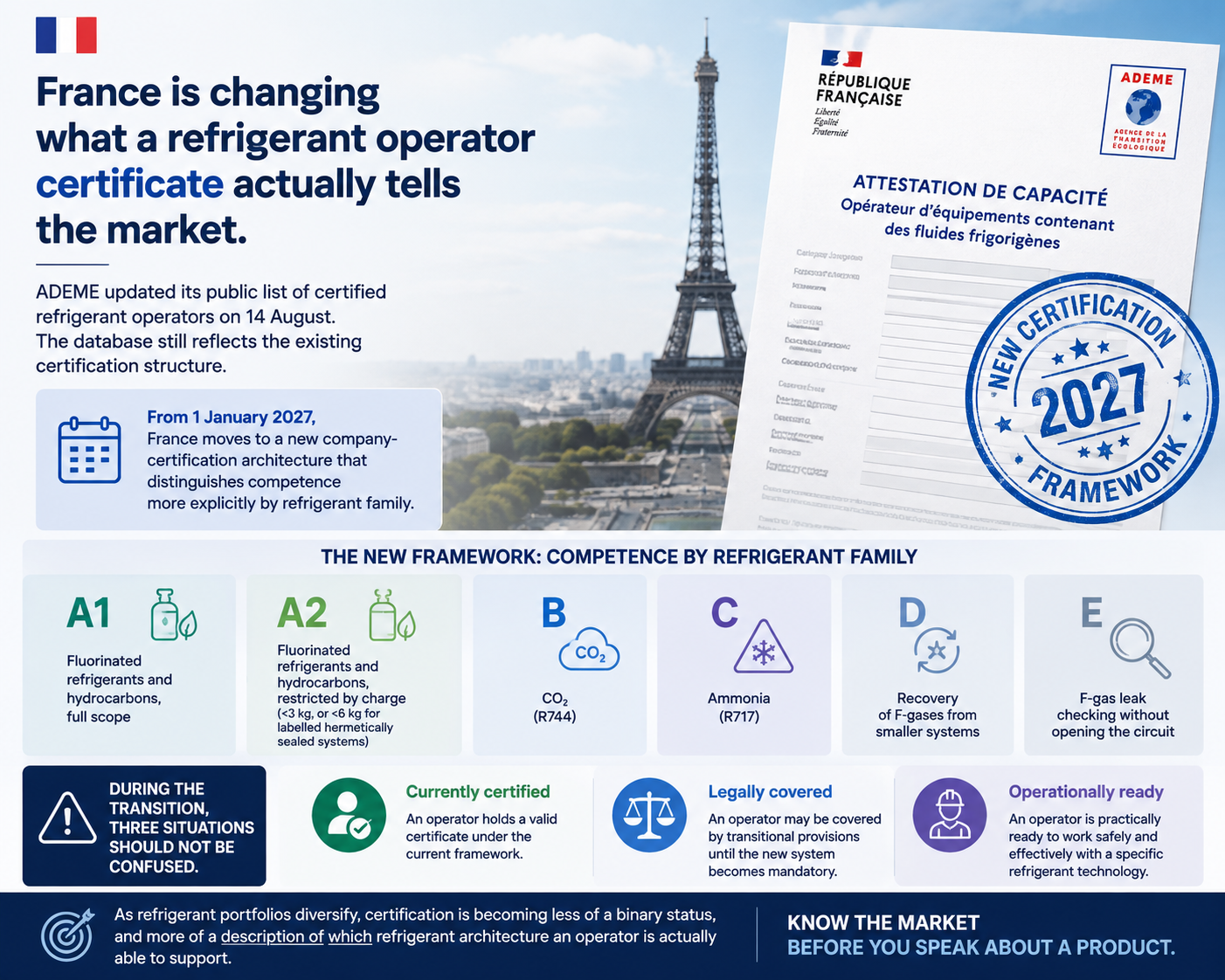

➡️ ADEME updated its public list of certified refrigerant operators on 14 August.
The database still reflects the existing certification structure.
But from 𝟭 𝗝𝗮𝗻𝘂𝗮𝗿𝘆 𝟮𝟬𝟮𝟳, 𝗙𝗿𝗮𝗻𝗰𝗲 moves to a new framework that distinguishes competence more explicitly by refrigerant family, both at operator level (attestation de capacité) and technician level (attestation d’aptitude).
For operators, the new categories include:
▪️ A1 and A2, fluorinated refrigerants and hydrocarbons
▪️ B, CO₂
▪️ C, ammonia
➡️ with additional categories for specific activities.
This is more than an administrative change.
The refrigerant family itself becomes part of the competence perimeter.
During the transition, three situations should therefore not be confused:
▪️ currently certified,
▪️ legally covered,
▪️ operationally ready for a specific refrigerant.
➡️ They are not necessarily the same thing.
An installer currently working on #R32 systems cannot automatically be considered ready for #R290.
The same applies even more clearly to CO₂ and ammonia, where dedicated certification pathways now exist.
➡️ This changes how a manufacturer should evaluate the market before introducing a new refrigerant-based product.
𝗣𝗿𝗼𝗱𝘂𝗰𝘁 𝗮𝘃𝗮𝗶𝗹𝗮𝗯𝗶𝗹𝗶𝘁𝘆 𝗮𝗻𝗱 𝗺𝗮𝗿𝗸𝗲𝘁 𝗿𝗲𝗮𝗱𝗶𝗻𝗲𝘀𝘀 𝗮𝗿𝗲 𝗻𝗼𝘁 𝘁𝗵𝗲 𝘀𝗮𝗺𝗲 𝘁𝗵𝗶𝗻𝗴.
The French transition makes one point increasingly clear: “F-Gas certified” will no longer be a sufficiently precise description of technical capability.
The relevant distinction will increasingly be which refrigerant families an operator, and the technicians behind it, are actually qualified to handle.