𝗟𝗚 𝗘𝗹𝗲𝗰𝘁𝗿𝗼𝗻𝗶𝗰𝘀 𝗿𝗲𝗰𝗲𝗻𝘁𝗹𝘆 𝘀𝗶𝗴𝗻𝗲𝗱 𝗮𝗻 𝗮𝗴𝗿𝗲𝗲𝗺𝗲𝗻𝘁 𝘄𝗶𝘁𝗵 𝗦𝗞 𝗘𝗻𝗺𝗼𝘃𝗲
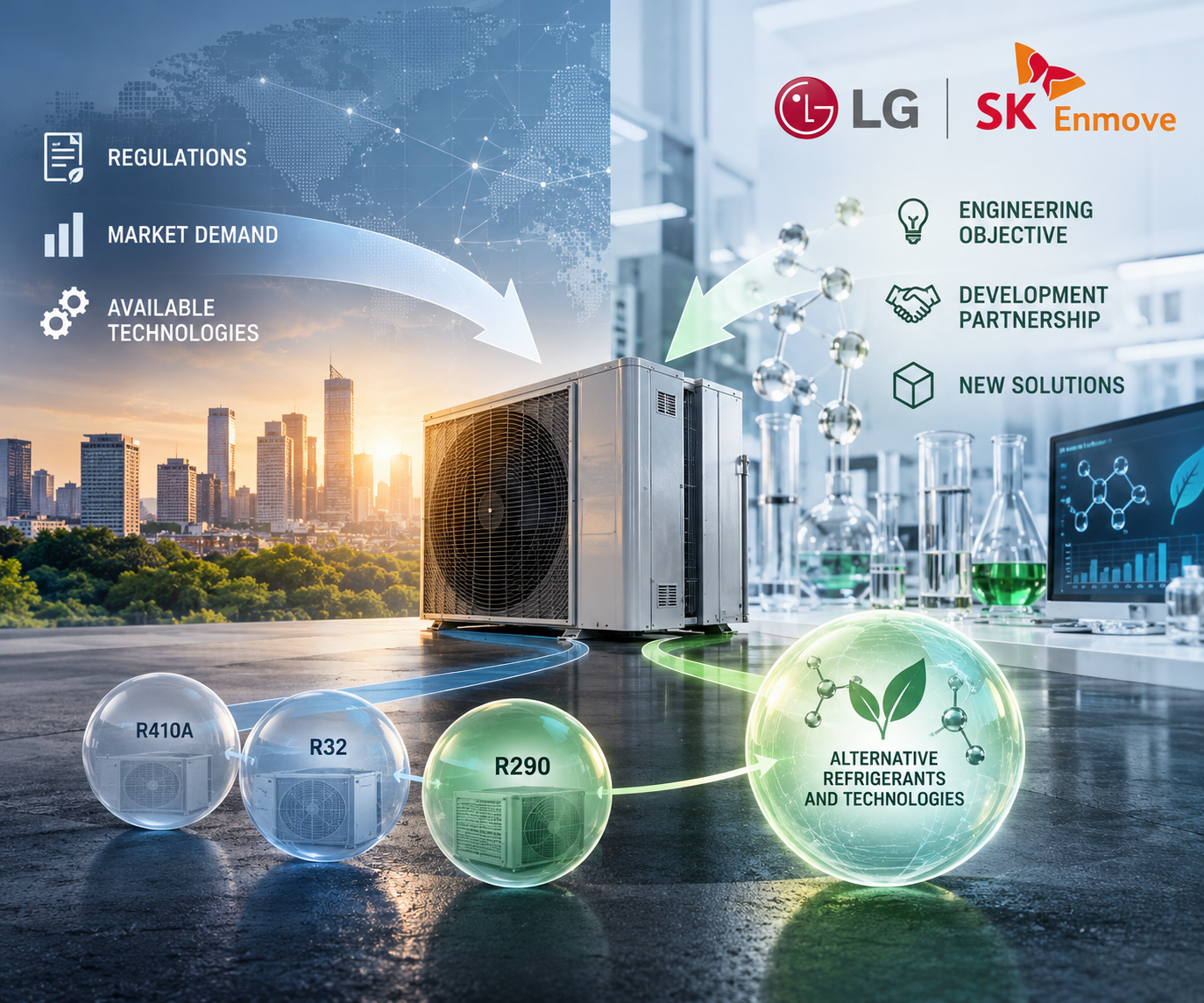
to jointly develop new refrigerants, refrigeration lubricants and cooling technologies.
LG is not simply selecting an existing refrigerant and designing equipment around it. It is participating directly in developing the fluids and technologies that could shape its future products.
Over the years, from R410A to R32 and more recently R290, regulatory requirements, available technologies and market demand have strongly influenced manufacturers' product development decisions.
➡️ But technological evolution does not necessarily follow only this direction.
It can also begin with an engineering objective, bringing together equipment manufacturers and specialised partners to develop a solution that may subsequently find its place in the market.
Rather than adapting exclusively to an established technological framework, a manufacturer can participate in developing alternatives around its own system requirements.
➡️ This does not guarantee market adoption or a competitive advantage.
But it changes the manufacturer's position in the development process, from selecting among available solutions to helping define what may become available.
➡️ For industrial manufacturers, the decision is not simply which technology to adopt.
It is whether their competitive advantage will come from developing better products within an established technological framework, or from investing in technologies that could create new market opportunities.
‼️Expansion is not acceleration. It is architecture.