𝗗𝗮𝘁𝗮 𝗰𝗲𝗻𝘁𝗿𝗲 𝗰𝗼𝗼𝗹𝗶𝗻𝗴 𝗶𝘀 𝗻𝗼 𝗹𝗼𝗻𝗴𝗲𝗿 𝗼𝗻𝗹𝘆 𝗮 𝗳𝗮𝗰𝗶𝗹𝗶𝘁𝘆 𝗲𝗾𝘂𝗶𝗽𝗺𝗲𝗻𝘁 𝗾𝘂𝗲𝘀𝘁𝗶𝗼𝗻.
It is becoming a strategic infrastructure question.
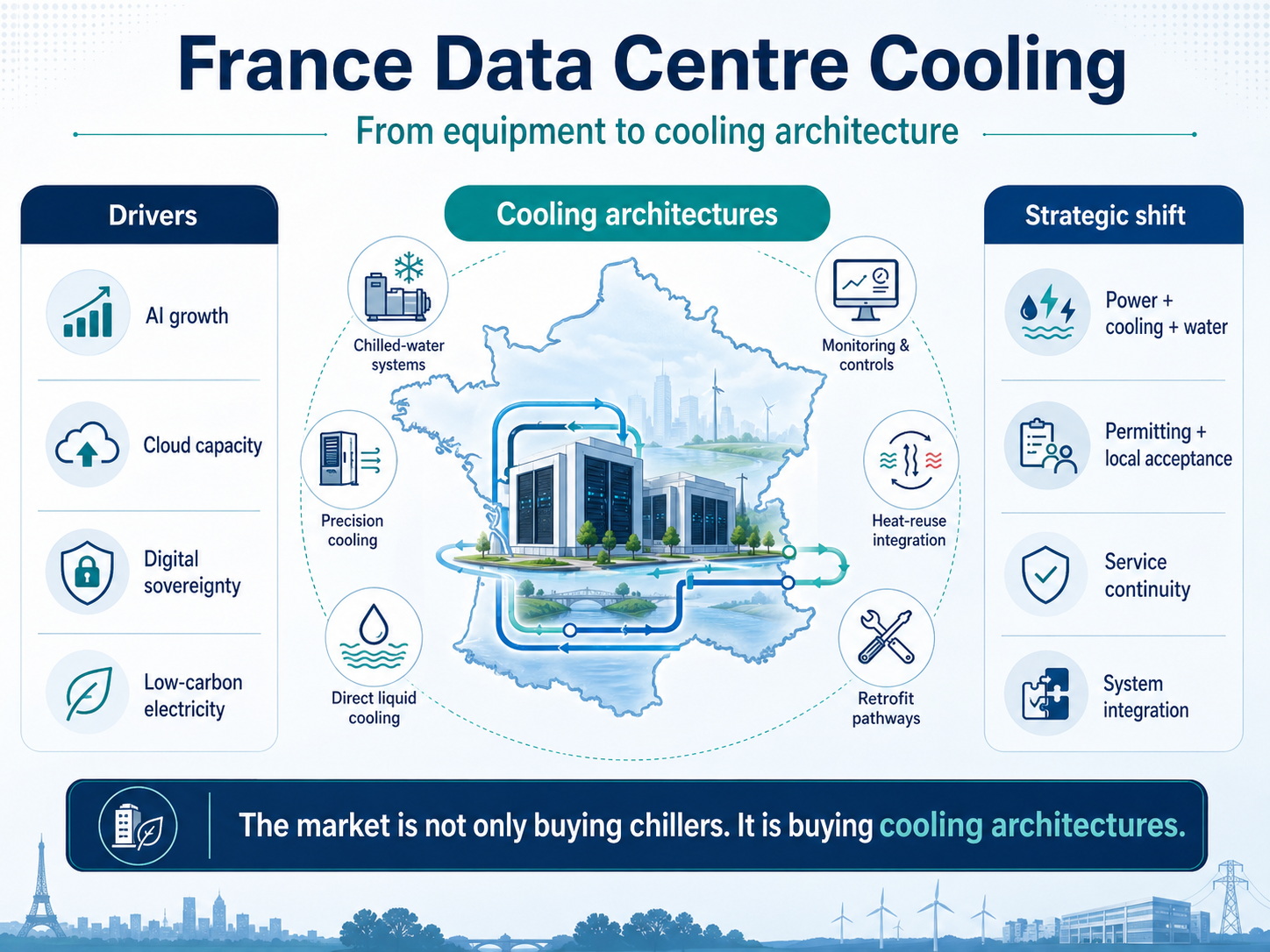
In France, AI, cloud capacity and digital sovereignty are accelerating data-centre development.
But this growth changes the cooling equation.
The market is not only buying chillers.
It is buying cooling architectures:
✔️ chilled-water systems
✔️ precision cooling
✔️ direct liquid cooling
✔️ monitoring and controls
✔️ heat-reuse integration
✔️ retrofit pathways
❗ This distinction matters.
Because the real constraint is no longer only server demand.
It is the ability to align power availability, cooling capacity, water use, permitting, local acceptance and long-term service continuity.
Traditional HVAC/R expertise remains important.
Chillers, refrigerants, low-PRG solutions, leak management and recovery will still play a role, especially in existing sites and hybrid architectures.
But the value is moving from equipment selection to system integration.
In liquid-based and immersion cooling, the fluid becomes part of the interface between electronics, infrastructure and long-term reliability.
This changes who can influence the cooling architecture.
Not only equipment manufacturers.
But also speciality fluid suppliers, industrial chemistry companies, controls specialists and system integrators.
The question is no longer only:
“Which equipment performs better?”
But:
“𝗪𝗵𝗶𝗰𝗵 𝗮𝗿𝗰𝗵𝗶𝘁𝗲𝗰𝘁𝘂𝗿𝗲 𝗰𝗮𝗻 𝗿𝗲𝗺𝗮𝗶𝗻 𝗿𝗲𝗹𝗶𝗮𝗯𝗹𝗲, 𝗲𝗳𝗳𝗶𝗰𝗶𝗲𝗻𝘁 𝗮𝗻𝗱 𝗮𝗰𝗰𝗲𝗽𝘁𝗮𝗯𝗹𝗲 𝗮𝘀 𝗱𝗲𝗻𝘀𝗶𝘁𝘆 𝗶𝗻𝗰𝗿𝗲𝗮𝘀𝗲𝘀?”
➡️ In France, data-centre cooling should not be read only as a product opportunity.
It is a market-structuring signal.