𝗧𝗵𝗲 𝗙𝗿𝗲𝗻𝗰𝗵 𝗵𝗲𝗮𝘁 𝗽𝘂𝗺𝗽 𝗺𝗮𝗿𝗸𝗲𝘁 𝗶𝘀 𝗮𝘁𝘁𝗿𝗮𝗰𝘁𝗶𝗻𝗴 𝗮𝘁𝘁𝗲𝗻𝘁𝗶𝗼𝗻 𝗮𝗴𝗮𝗶𝗻.

✔️ New announcements.
✔️ New expectations.
✔️ New movements from manufacturers, distributors and installers.
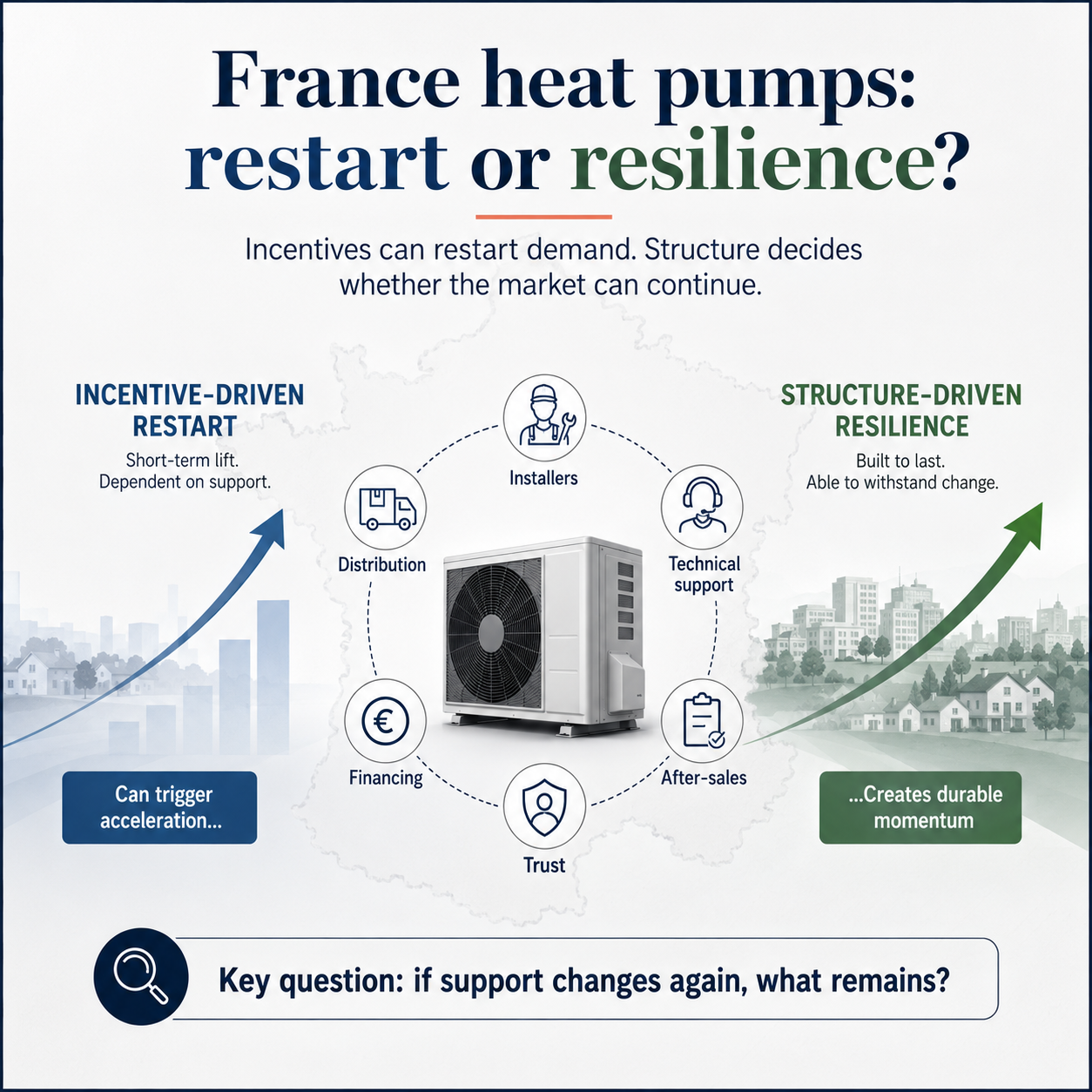
But the real question is not only whether incentives can restart demand.
➡️ The real question is whether the market can remain active if incentives change again.
I first saw this pattern around 2009, while working around the PV module market.
▪️ Incentives created acceleration.
▪️ ROI attracted investors.
▪️ Banks became central to project validation.
▪️ Bankability filtered manufacturers from the beginning.
The market moved fast.
But when incentives changed and ROI decreased, part of the market was not ready to continue under different conditions.
☑️ The issue was not the technology itself.
✅ The issue was that acceleration had not created enough structure.
This is the question I see today around heat pumps in hashtagFrance.
If public support becomes less favourable again, what remains?
A stable installer base?
Reliable distribution?
Technical support?
After-sales capacity?
Customer trust?
A clear renovation logic?
For manufacturers entering or expanding in France, this distinction matters.
A market can look attractive because incentives restart demand.
But a resilient market depends on the structure built while demand is accelerating.
Incentives can restart a market.
➡️ Structure decides whether the market can continue.
‼️Expansion is not acceleration. It is architecture.