𝗧𝗵𝗲 𝟮𝟬𝟮𝟳 𝗛𝗙𝗖 𝗾𝘂𝗼𝘁𝗮 𝗿𝗲𝗱𝘂𝗰𝘁𝗶𝗼𝗻 𝗺𝗮𝘆 𝗻𝗼𝘁 𝗼𝗻𝗹𝘆 𝗿𝗲𝗱𝘂𝗰𝗲 𝘀𝘂𝗽𝗽𝗹𝘆.

It may change the way the traditional refrigerant market works.
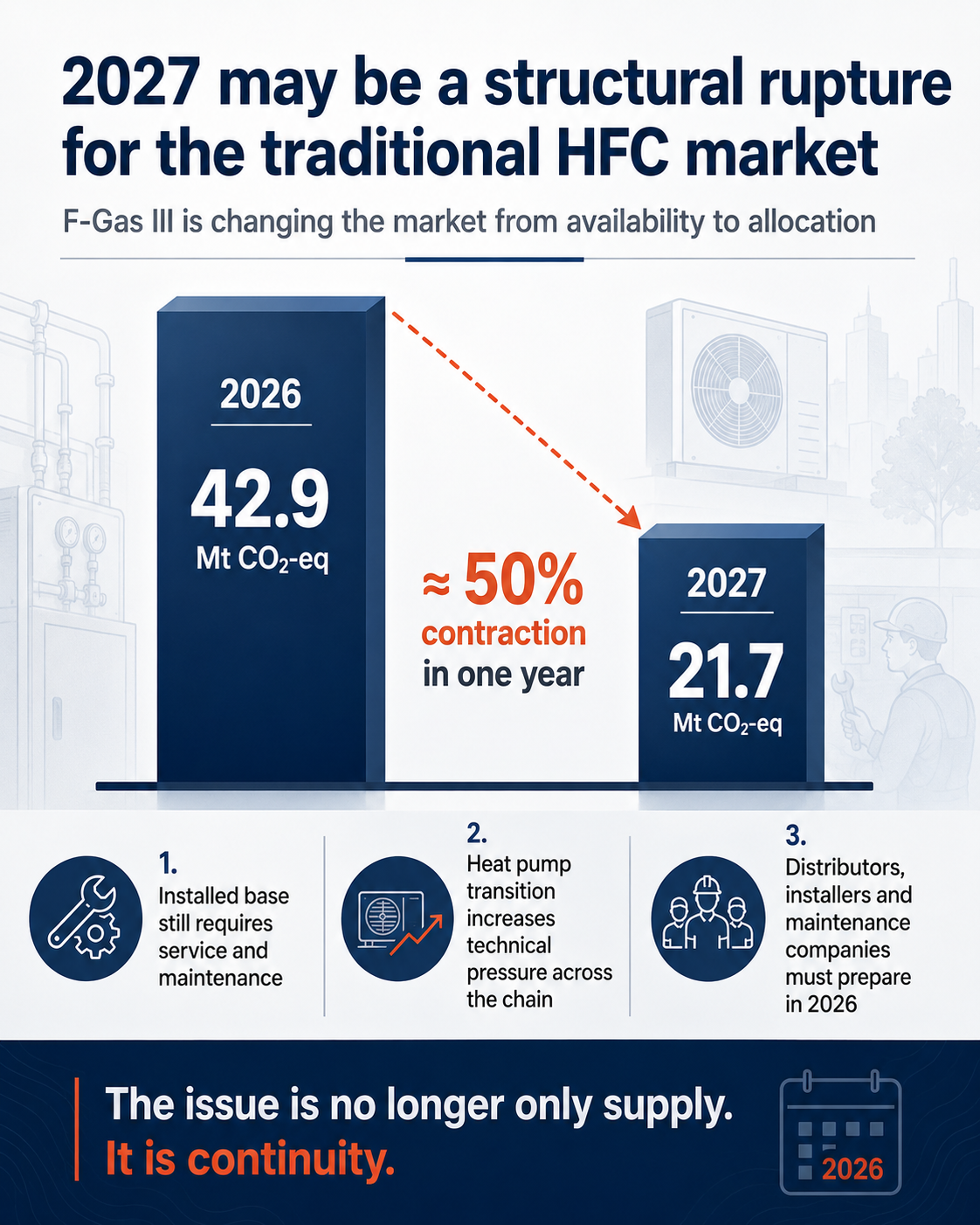
➡️ Under Regulation (EU) 2024/573, the HFC market quota moves from 𝗳𝗿𝗼𝗺 𝟰𝟮.𝟵 𝗠𝘁 𝗖𝗢₂-𝗲𝗾 𝗶𝗻 𝟮𝟬𝟮𝟲 to 𝟮𝟭.𝟳 𝗠𝘁 𝗖𝗢₂-𝗲𝗾 𝗶𝗻 𝟮𝟬𝟮𝟳.
☑️ That is not a marginal adjustment.
✅ It is a structural contraction.
The issue is not only that less hashtagHFC volume will be available on the market.
The issue is that the installed base will still require service, maintenance, repair and continuity.
At the same time, heat pumps, refrigeration systems and air-conditioning equipment continue to expand the technical pressure on installers, distributors and maintenance companies.
➡️ This creates a different market logic.
▪️ Not only availability.
✔️ Allocation.
▪️ Not only price.
✔️ Continuity of service.
▪️ Not only product substitution.
✔️ Operational risk management.
▪️ For distributors, 2026 is not only a selling year.
➡️ It is a preparation year.
➡️ For installers, refrigerant availability can become a planning constraint.
➡️ For maintenance companies, the risk is more direct: contracts may become harder to execute if product access becomes uncertain.
✅ This is where the F-Gas transition becomes more than regulation.
➡️ It becomes a test of market architecture.
The companies that prepare only when shortage becomes visible may already be late.
The companies that map their installed base, anticipate demand, structure alternatives and secure technical readiness will have more control.
➡️ 2027 may become a structural rupture for the traditional HFC market.
Not because demand disappears.
But because the market will have to serve an existing installed base with a much tighter quota framework.
‼️Expansion is not acceleration. It is architecture.