𝗦𝘂𝗽𝗲𝗿𝗺𝗮𝗿𝗸𝗲𝘁 𝗿𝗲𝗳𝗿𝗶𝗴𝗲𝗿𝗮𝘁𝗶𝗼𝗻 𝗶𝘀 𝗯𝗲𝗰𝗼𝗺𝗶𝗻𝗴 𝗮 𝗽𝗮𝗿𝘁𝗶𝗰𝘂𝗹𝗮𝗿𝗹𝘆 𝘀𝗲𝗻𝘀𝗶𝘁𝗶𝘃𝗲 𝗽𝗼𝗶𝗻𝘁 𝗶𝗻 𝘁𝗵𝗲 𝗰𝘂𝗿𝗿𝗲𝗻𝘁 𝗿𝗲𝗳𝗿𝗶𝗴𝗲𝗿𝗮𝗻𝘁 𝘁𝗿𝗮𝗻𝘀𝗶𝘁𝗶𝗼𝗻.
You should also read:
𝗗𝗼𝗲𝘀 𝗱𝗶𝘀𝘁𝗿𝗶𝗯𝘂𝘁𝗶𝗼𝗻 𝗱𝗲𝗻𝘀𝗶𝘁𝘆 𝗺𝗮𝘁𝘁𝗲𝗿 𝗶𝗻 𝘁𝗲𝗰𝗵𝗻𝗶𝗰𝗮𝗹 𝗺𝗮𝗿𝗸𝗲𝘁𝘀?
In many technical sectors, market expansion is often approached through national agreements with large distributors. ✅ But in practice, the reality on the ground can be quite different. In sectors such as HVAC, installers rarely maintain significant product inventories. Instead, they rely on…
Continue reading...𝗛𝗲𝗮𝘁 𝗣𝘂𝗺𝗽𝘀 𝗶𝗻 𝗘𝘂𝗿𝗼𝗽𝗲
𝗛𝗲𝗮𝘁 𝗣𝘂𝗺𝗽𝘀 𝗶𝗻 𝗘𝘂𝗿𝗼𝗽𝗲: 𝗦𝗲𝗹𝗲𝗰𝘁𝗶𝘃𝗲 𝗚𝗿𝗼𝘄𝘁𝗵, 𝗥𝗲𝗴𝘂𝗹𝗮𝘁𝗼𝗿𝘆 𝗣𝗿𝗲𝘀𝘀𝘂𝗿𝗲 𝗮𝗻𝗱 𝗘𝗻𝘁𝗿𝘆 𝗔𝗿𝗰𝗵𝗶𝘁𝗲𝗰𝘁𝘂𝗿𝗲 Recent European heat pump sales data show a heterogeneous landscape. Some markets are returning to growth in 2025. Others, such as France, are experiencing a slowdown, partly linked to adjustments in incentive schemes.
Continue reading...𝗔𝗿𝗲 𝗬𝗼𝘂 𝗘𝗻𝘁𝗲𝗿𝗶𝗻𝗴 𝗮 𝗠𝗮𝗿𝗸𝗲𝘁 — 𝗼𝗿 𝗥𝗲𝗻𝘁𝗶𝗻𝗴 𝗮 𝗣𝗼𝗿𝘁𝗳𝗼𝗹𝗶𝗼?
I often see the same entry strategy: A company wants to expand into a new country. Instead of structuring a market architecture, they look for: ✔️ A sales agent already selling similar products ✔️ An agent with an established portfolio ✔️ Someone who can…
Continue reading...
But because of scale.
Supermarkets are distributed, always operating, and cannot tolerate disruption.
In the coming years, a large part of this installed base will require investment:
◾ to align with the F-Gas trajectory
◾ to anticipate refrigerant constraints
◾ to replace aging systems
This makes the transition more than a technology upgrade.
Because in practice, stores must keep running.
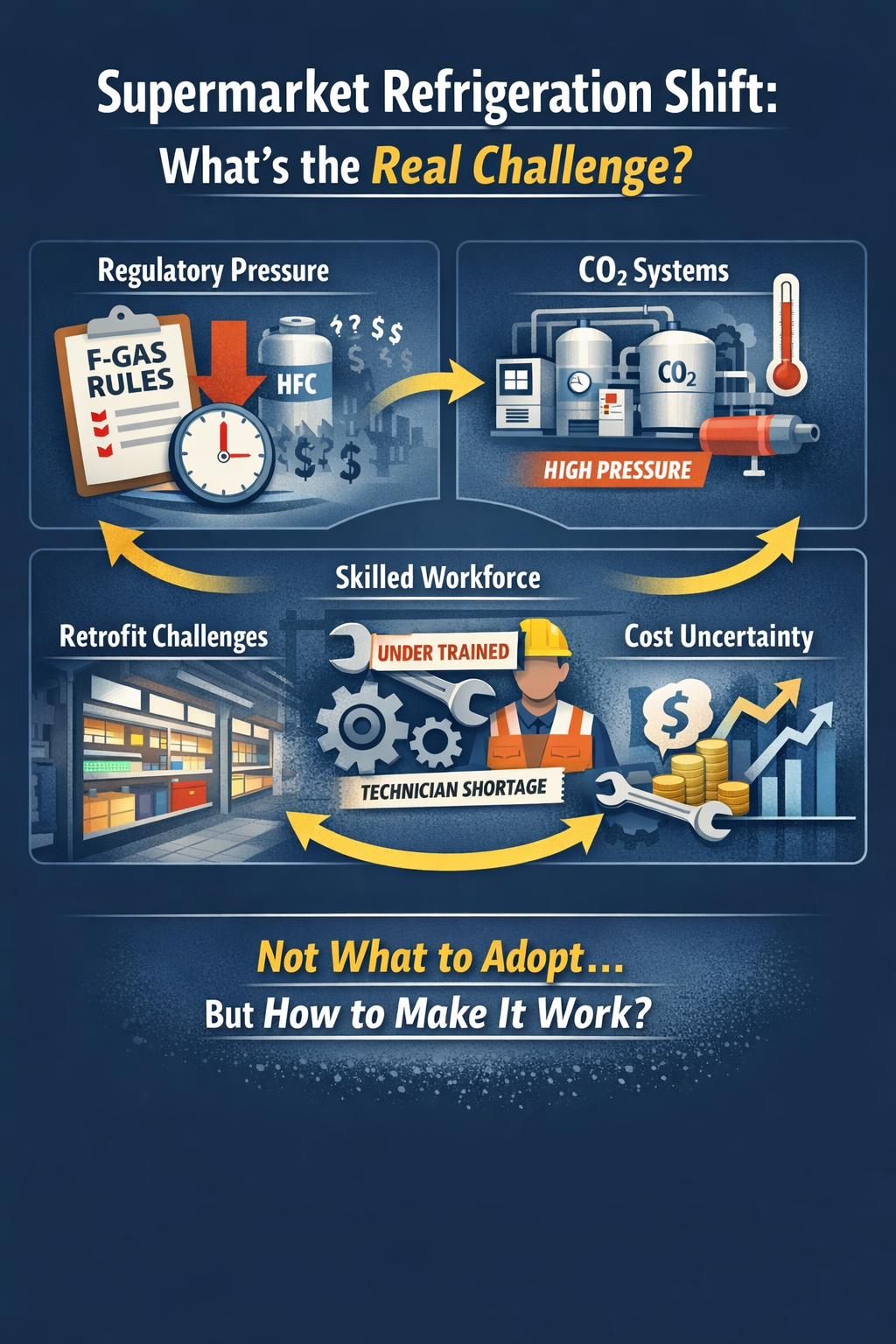
Which shifts the focus from what to install
✅ to 𝗵𝗼𝘄 𝘁𝗼 𝘁𝗿𝗮𝗻𝘀𝗳𝗼𝗿𝗺 𝘄𝗶𝘁𝗵𝗼𝘂𝘁 𝗱𝗶𝘀𝗿𝘂𝗽𝘁𝗶𝗻𝗴 𝗼𝗽𝗲𝗿𝗮𝘁𝗶𝗼𝗻𝘀.
The direction is clear:
✔️ high-GWP refrigerants are phasing down
✔️ alternatives are available
✔️ deployment is accelerating
But implementation remains uneven.
𝟭. 𝗔 𝗿𝗲𝗳𝗲𝗿𝗲𝗻𝗰𝗲 𝘀𝗼𝗹𝘂𝘁𝗶𝗼𝗻… 𝘄𝗶𝘁𝗵 𝗹𝗶𝗺𝗶𝘁𝘀
CO₂ is increasingly the standard.
But performance still depends on:
◾ climate
◾ design
◾ execution
Which creates variability.
𝟮. 𝗔 𝘁𝗿𝗮𝗻𝘀𝗶𝘁𝗶𝗼𝗻 𝗯𝗲𝘆𝗼𝗻𝗱 𝗲𝗾𝘂𝗶𝗽𝗺𝗲𝗻𝘁
This is not just a replacement.
It involves:
◾ new installation practices
◾ different commissioning
◾ higher maintenance sensitivity
Skills availability often becomes decisive.
𝟯. 𝗗𝗲𝗰𝗶𝘀𝗶𝗼𝗻𝘀 𝘂𝗻𝗱𝗲𝗿 𝗽𝗮𝗿𝘁𝗶𝗮𝗹 𝘃𝗶𝘀𝗶𝗯𝗶𝗹𝗶𝘁𝘆
Investments are driven by regulation and risk.
But:
◾ performance varies
◾ costs are not fully stabilized
Which makes comparisons complex.
𝟰. 𝗘𝘅𝗶𝘀𝘁𝗶𝗻𝗴 𝘀𝘁𝗼𝗿𝗲𝘀 𝗮𝗿𝗲 𝘁𝗵𝗲 𝗰𝗼𝗻𝘀𝘁𝗿𝗮𝗶𝗻𝘁
New builds are manageable.
Existing stores are not:
◾ space limits
◾ integration complexity
◾ need for continuity
This is where planning becomes critical.
The question is shifting:
🔴 From: 𝑊ℎ𝑖𝑐ℎ 𝑠𝑜𝑙𝑢𝑡𝑖𝑜𝑛 𝑡𝑜 𝑐ℎ𝑜𝑜𝑠𝑒?
🔵 To: 𝗛𝗼𝘄 𝘁𝗼 𝗱𝗲𝗽𝗹𝗼𝘆 𝗰𝗼𝗻𝘀𝗶𝘀𝘁𝗲𝗻𝘁𝗹𝘆 𝗮𝘁 𝘀𝗰𝗮𝗹𝗲?
‼️𝗘𝘅𝗽𝗮𝗻𝘀𝗶𝗼𝗻 𝗶𝘀 𝗻𝗼𝘁 𝗮𝗰𝗰𝗲𝗹𝗲𝗿𝗮𝘁𝗶𝗼𝗻. 𝗜𝘁 𝗶𝘀 𝗮𝗿𝗰𝗵𝗶𝘁𝗲𝗰𝘁𝘂𝗿𝗲.