𝗥𝗲𝘁𝗿𝗼𝗳𝗶𝘁 𝗶𝘀 𝗼𝗳𝘁𝗲𝗻 𝗽𝗿𝗲𝘀𝗲𝗻𝘁𝗲𝗱 𝗮𝘀 𝗮 𝗿𝗲𝗳𝗿𝗶𝗴𝗲𝗿𝗮𝗻𝘁 𝗿𝗲𝗽𝗹𝗮𝗰𝗲𝗺𝗲𝗻𝘁. 𝗜𝗻 𝗿𝗲𝗮𝗹𝗶𝘁𝘆, 𝗶𝘁 𝗶𝘀 𝗮 𝗱𝗲𝗰𝗶𝘀𝗶𝗼𝗻 𝗼𝗻 𝘁𝗵𝗲 𝗳𝘂𝘁𝘂𝗿𝗲 𝗼𝗳 𝘁𝗵𝗲 𝗶𝗻𝘀𝘁𝗮𝗹𝗹𝗮𝘁𝗶𝗼𝗻.
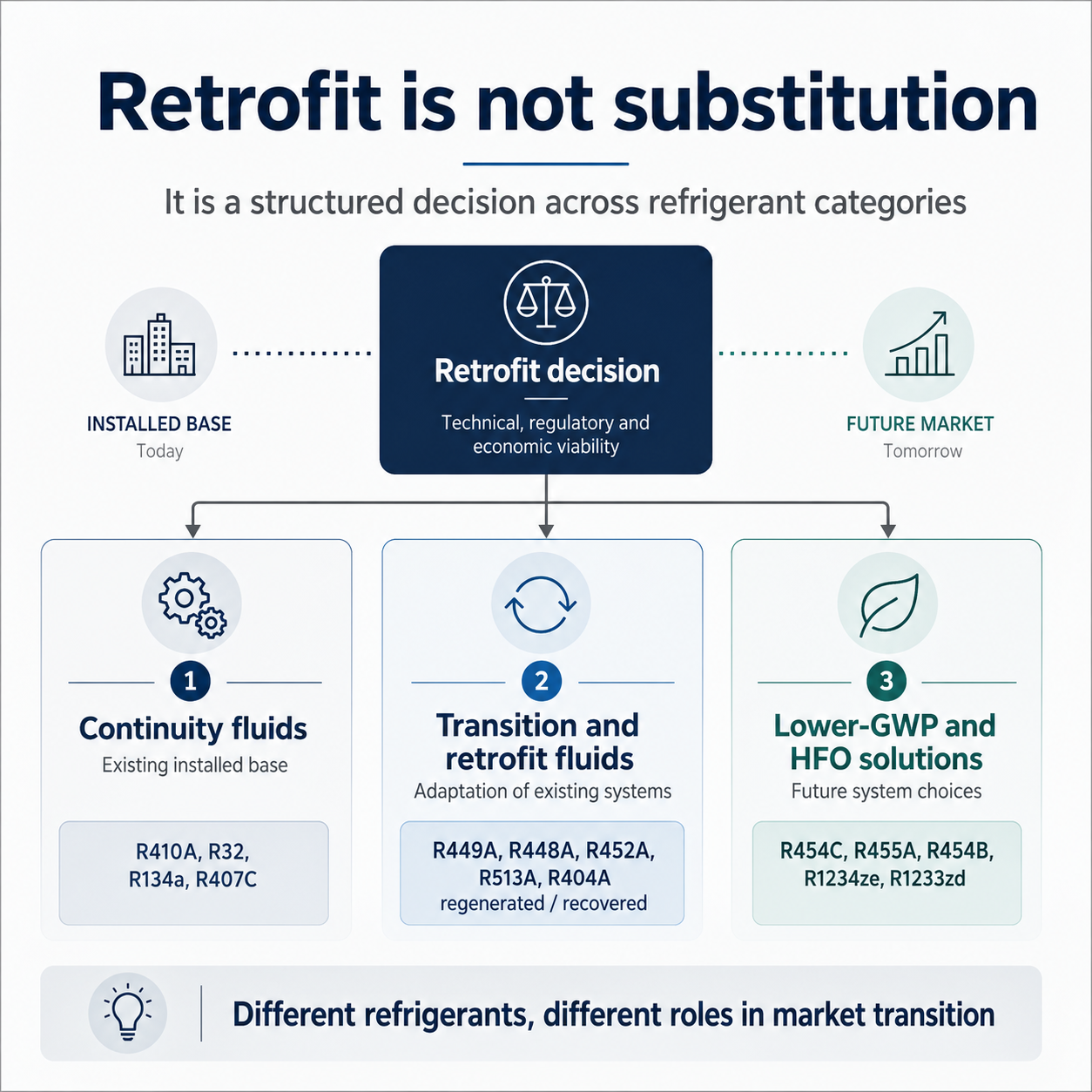
Some refrigerants are still sold, mainly because the installed base still needs them.
𝗥𝟰𝟭𝟬𝗔 / 𝗥𝟯𝟮 / 𝗥𝟭𝟯𝟰𝗮 / 𝗥𝟰𝟬𝟳𝗖:
They are not necessarily the future of the market.
But they remain connected to thousands of existing systems that still need to operate, be maintained, and stay economically viable.
‼️ This distinction matters.
In HVAC/R, retrofit is often discussed through product compatibility:
✅ Which fluid can replace the existing one?
✅ Which solution is available?
✅ Which option is technically coherent?
❗ These questions are necessary.
🔵 But they are not enough.
The real question is broader:
𝗪𝗵𝗶𝗰𝗵 𝗽𝗮𝘁𝗵 𝗮𝗹𝗹𝗼𝘄𝘀 𝘁𝗵𝗲 𝗶𝗻𝘀𝘁𝗮𝗹𝗹𝗮𝘁𝗶𝗼𝗻 𝘁𝗼 𝗿𝗲𝗺𝗮𝗶𝗻 𝘃𝗶𝗮𝗯𝗹𝗲 𝘁𝗲𝗰𝗵𝗻𝗶𝗰𝗮𝗹𝗹𝘆, 𝗲𝗰𝗼𝗻𝗼𝗺𝗶𝗰𝗮𝗹𝗹𝘆, 𝗮𝗻𝗱 𝗿𝗲𝗴𝘂𝗹𝗮𝘁𝗼𝗿𝘆?
This is where retrofit becomes more than a technical operation.
🔵 For distributors, installers, and technical partners, the value is no longer only in supplying the fluid.
It is in helping the customer understand whether an installation should be:
✔️ maintained
✔️ adapted
✔️ progressively transitioned
✔️ or prepared for a different technical direction
That requires reading several layers at the same time:
✅ application
✅ operating conditions
✅ equipment limits
✅ regulatory trajectory
✅ remaining economic life
❗ This is why retrofit can become a credibility lever in the market.
🔴 Not because it offers one universal answer.
🔵 But because it helps structure the decision.
🔵 In this context, refrigerants are not just products.
‼️ They are indicators of installed-base dependency, transition readiness, and future technical constraints.