𝗔 𝗵𝗶𝗴𝗵-𝗲𝗳𝗳𝗶𝗰𝗶𝗲𝗻𝗰𝘆 𝗛𝗩𝗔𝗖/𝗥 𝗽𝗿𝗼𝗱𝘂𝗰𝘁 𝗰𝗮𝗻 𝘀𝘁𝗶𝗹𝗹 𝗯𝗲𝗰𝗼𝗺𝗲 𝗮 𝗹𝗼𝘄-𝗽𝗲𝗿𝗳𝗼𝗿𝗺𝗶𝗻𝗴 𝗯𝘂𝗶𝗹𝗱𝗶𝗻𝗴 𝗮𝘀𝘀𝗲𝘁.
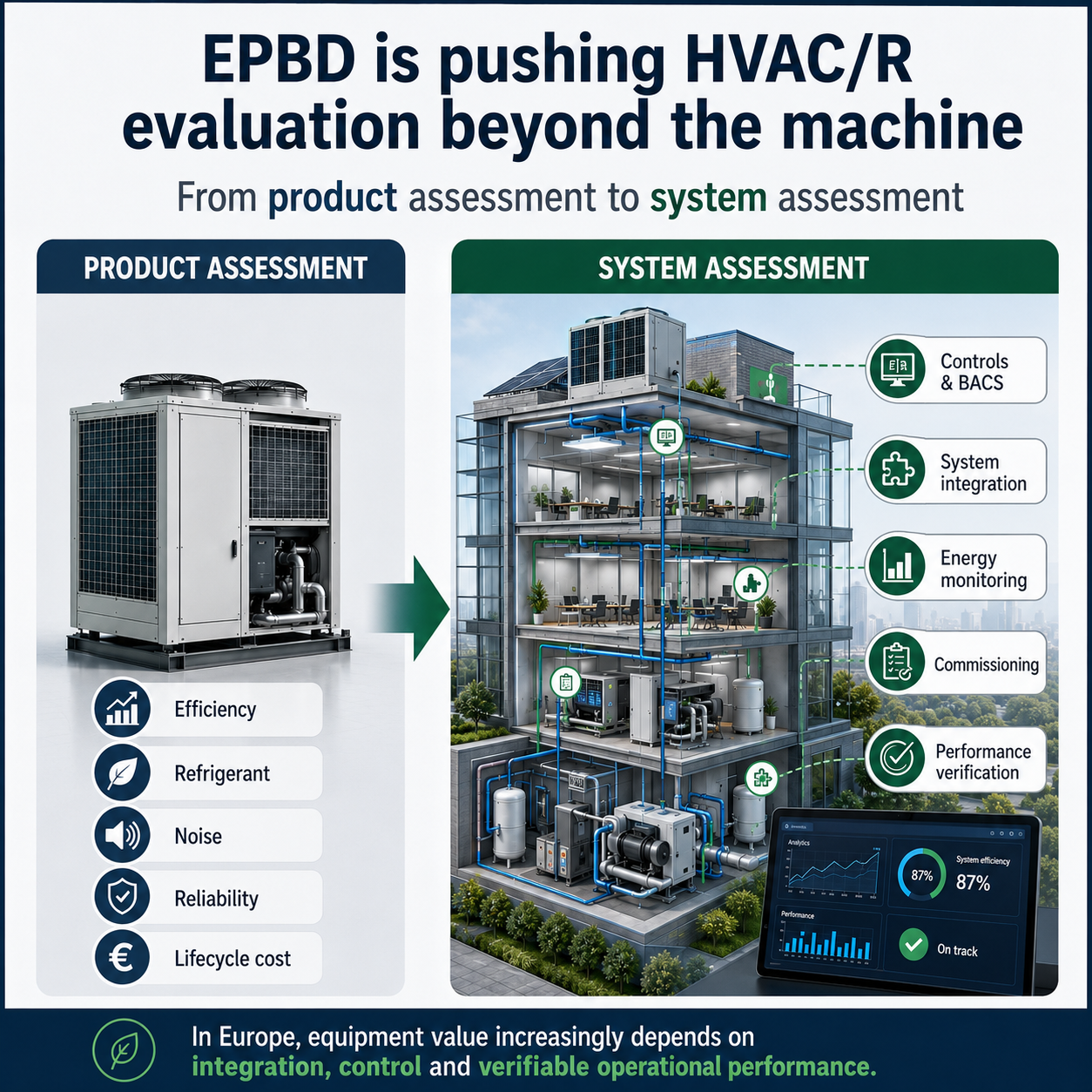

This is one of the technical implications of the European building-performance framework.
A heat pump, chiller or ventilation unit may offer:
▪️ high nominal efficiency
▪️ an appropriate refrigerant
▪️ low noise levels
▪️ reliable components
▪️ competitive lifecycle costs
But none of these characteristics guarantees good operational performance.
That also depends on whether the equipment can be:
▪️ correctly sized and commissioned
▪️ integrated into the building control architecture
▪️ operated under partial-load conditions
▪️ monitored over time
▪️ adjusted when actual performance diverges from design assumptions
The hashtagEPBD framework, including its provisions concerning building automation and control systems, is making this gap more visible.
𝗧𝗵𝗲 𝘁𝗲𝗰𝗵𝗻𝗶𝗰𝗮𝗹 𝗮𝘀𝘀𝗲𝘀𝘀𝗺𝗲𝗻𝘁 𝘁𝗵𝗲𝗿𝗲𝗳𝗼𝗿𝗲 𝗲𝘅𝘁𝗲𝗻𝗱𝘀 𝗯𝗲𝘆𝗼𝗻𝗱 𝘁𝗵𝗲 𝗲𝗳𝗳𝗶𝗰𝗶𝗲𝗻𝗰𝘆 𝗼𝗳 𝘁𝗵𝗲 𝗺𝗮𝗰𝗵𝗶𝗻𝗲.
It must also determine whether declared product performance can be translated into measurable building performance.
For manufacturers, this exposes a form of technical integration debt.
A catalogue and a performance table are no longer sufficient when the product arrives with:
▪️ restricted communication interfaces
▪️ unclear control sequences
▪️ limited commissioning guidance
▪️ weak compatibility documentation
▪️ no practical method for verifying operation
A distributor may explain the product.
An integrator may connect it.
But neither can fully compensate for integration logic that was not designed into the equipment and its technical documentation.
In the European HVAC/R market, product performance remains essential.
The more demanding test is whether that performance survives installation, integration and real building operation.
You should also read:

𝗟𝗮 𝗙𝗿𝗮𝗻𝗰𝗲 𝗲́𝘁𝘂𝗱𝗶𝗲 𝗱𝗲𝘀 𝘀𝗼𝗹𝘂𝘁𝗶𝗼𝗻𝘀 𝗱𝗲 𝗿𝗮𝗰𝗰𝗼𝗿𝗱𝗲𝗺𝗲𝗻𝘁 𝗽𝗹𝘂𝘀 𝗳𝗹𝗲𝘅𝗶𝗯𝗹𝗲𝘀 𝗽𝗼𝘂𝗿 𝗰𝗲𝗿𝘁𝗮𝗶𝗻𝘀 𝗽𝗿𝗼𝗷𝗲𝘁𝘀 𝗱𝗲 𝗽𝗿𝗼𝗱𝘂𝗰𝘁𝗶𝗼𝗻 𝗲𝘁 𝗱𝗲 𝘀𝘁𝗼𝗰𝗸𝗮𝗴𝗲.
Dans certains cas, cela peut signifier accepter des limitations définies d’injection ou de soutirage plutôt que d’attendre le renforcement complet du réseau. Cela m’a rappelé une situation observée lors de la première phase de développement du photovoltaïque en Italie. Le contexte était très différent et…
Continue reading...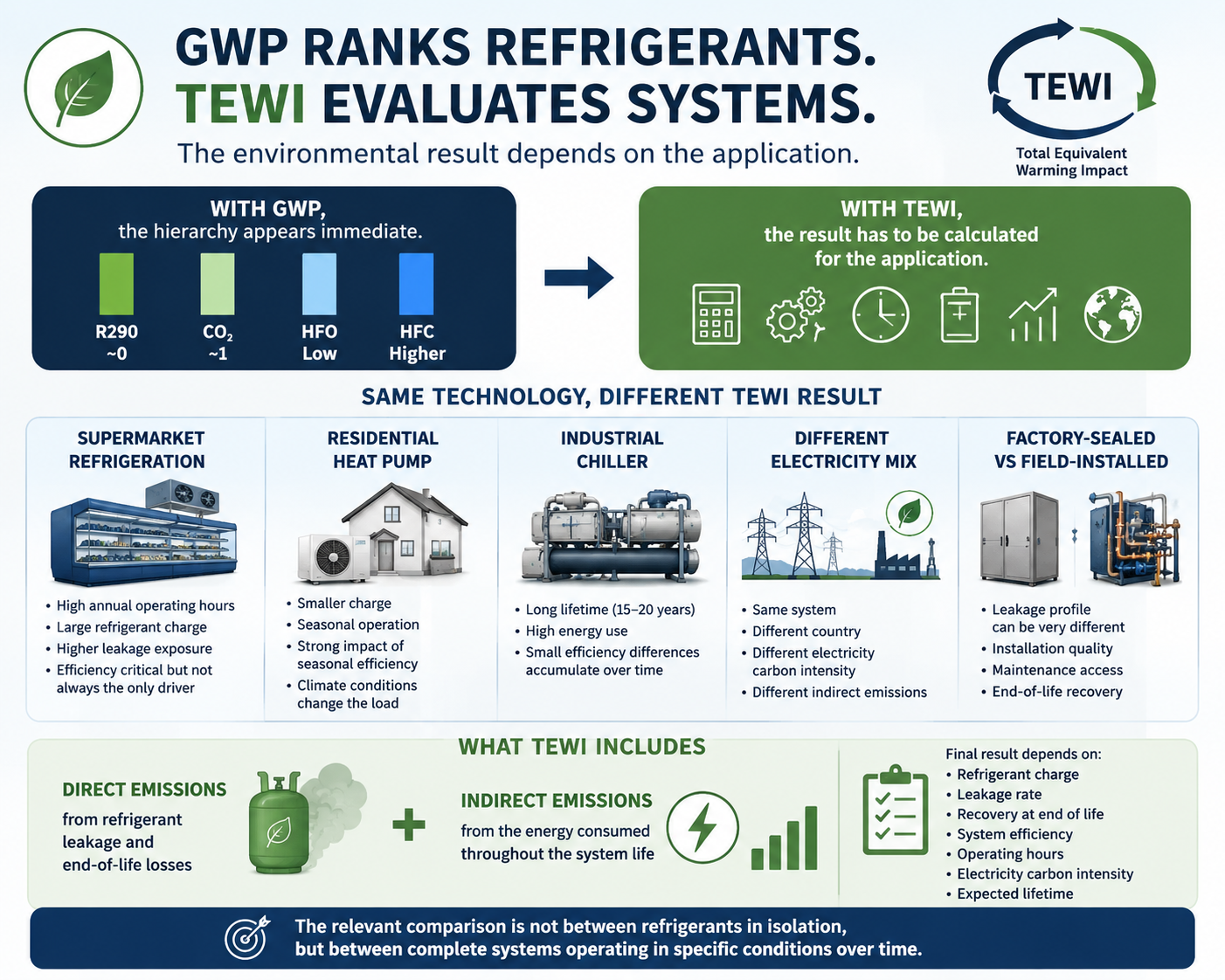
𝗪𝗲 𝗵𝗮𝘃𝗲 𝗱𝗶𝘀𝗰𝘂𝘀𝘀𝗲𝗱 𝘀𝗲𝘃𝗲𝗿𝗮𝗹 𝘁𝗶𝗺𝗲𝘀 𝗵𝗼𝘄 𝗚𝗪𝗣 𝗮𝗻𝗱 𝘁𝗵𝗲 𝗙-𝗚𝗮𝘀 𝗳𝗿𝗮𝗺𝗲𝘄𝗼𝗿𝗸 𝗮𝗿𝗲 𝗿𝗲𝘀𝗵𝗮𝗽𝗶𝗻𝗴 𝗿𝗲𝗳𝗿𝗶𝗴𝗲𝗿𝗮𝗻𝘁 𝗰𝗵𝗼𝗶𝗰𝗲𝘀 𝗶𝗻 𝗛𝗩𝗔𝗖/𝗥.
But when HFOs, natural refrigerants and other low-GWP solutions are compared, one parameter deserves more attention: 𝗧𝗘𝗪𝗜, 𝗧𝗼𝘁𝗮𝗹 𝗘𝗾𝘂𝗶𝘃𝗮𝗹𝗲𝗻𝘁 𝗪𝗮𝗿𝗺𝗶𝗻𝗴 𝗜𝗺𝗽𝗮𝗰𝘁. ➡️ With GWP, the hierarchy between refrigerants appears immediate. ➡️ With TEWI, the result has to be calculated for the application. Consider three different…
Continue reading...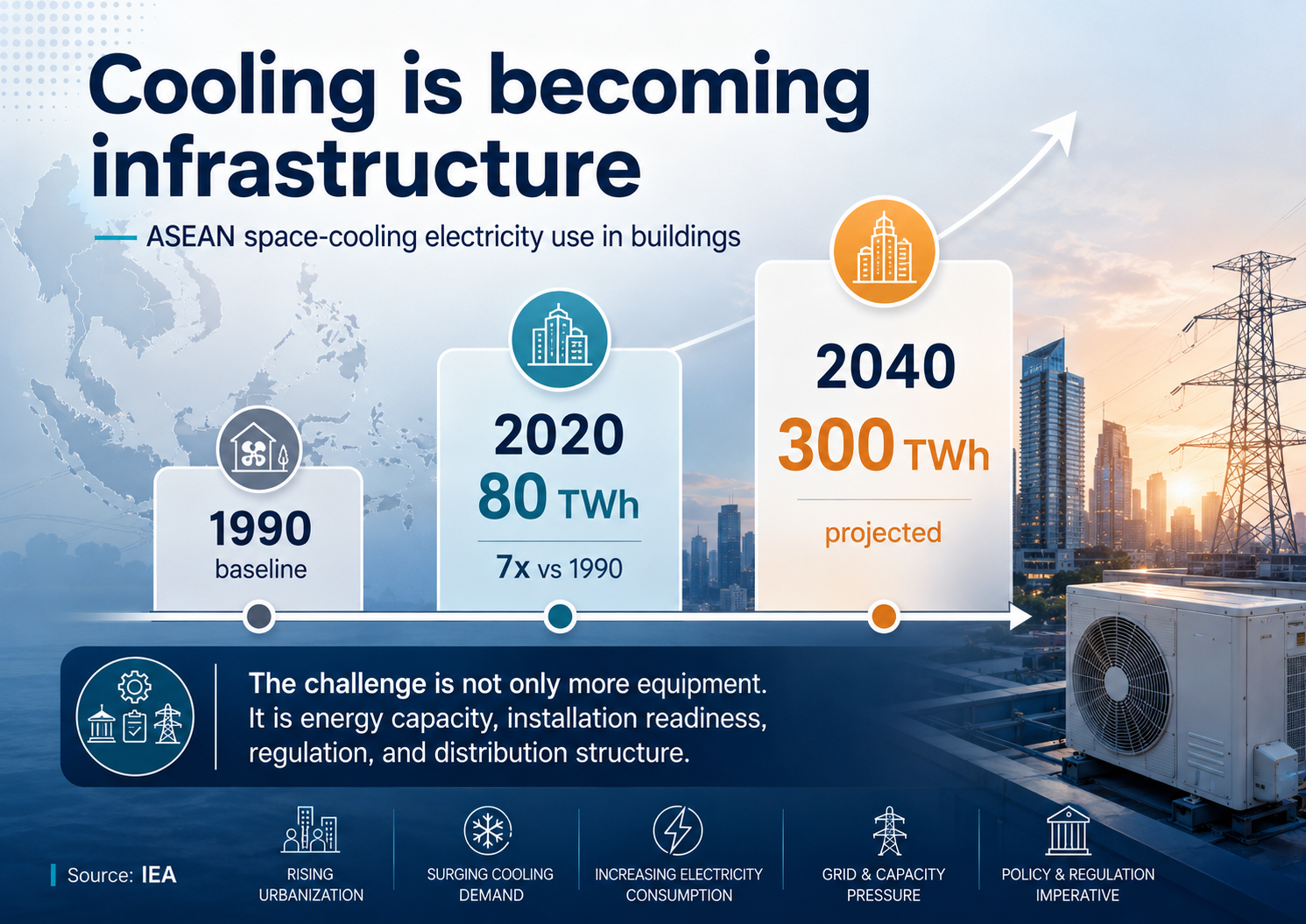
𝗜𝗻 𝗔𝗦𝗘𝗔𝗡, 𝗲𝗹𝗲𝗰𝘁𝗿𝗶𝗰𝗶𝘁𝘆 𝘂𝘀𝗲 𝗳𝗼𝗿 𝘀𝗽𝗮𝗰𝗲 𝗰𝗼𝗼𝗹𝗶𝗻𝗴 𝗶𝗻 𝗯𝘂𝗶𝗹𝗱𝗶𝗻𝗴𝘀 𝗿𝗲𝗮𝗰𝗵𝗲𝗱 𝗮𝗿𝗼𝘂𝗻𝗱 𝟴𝟬 𝗧𝗪𝗵 𝗶𝗻 𝟮𝟬𝟮𝟬.
That is 𝘀𝗲𝘃𝗲𝗻 𝘁𝗶𝗺𝗲𝘀 the level of 𝟭𝟵𝟵𝟬. 𝗕𝘆 𝟮𝟬𝟰𝟬, it could reach 𝟯𝟬𝟬 𝗧𝗪𝗵. Behind these figures, there is a larger market signal. Air conditioning is becoming essential infrastructure in many hot and humid regions, not only a comfort product. Cooling demand is rising…
Continue reading...