𝗙-𝗚𝗮𝘀 𝘁𝗿𝗮𝗻𝘀𝗶𝘁𝗶𝗼𝗻: 𝗰𝗮𝗻 𝗽𝗿𝗼𝗱𝘂𝗰𝘁 𝗶𝗻𝗻𝗼𝘃𝗮𝘁𝗶𝗼𝗻 𝗵𝗲𝗹𝗽 𝗽𝗿𝗲𝘀𝗲𝗿𝘃𝗲 𝗺𝗮𝗿𝗸𝗲𝘁 𝗰𝗼𝗻𝘁𝗶𝗻𝘂𝗶𝘁𝘆?
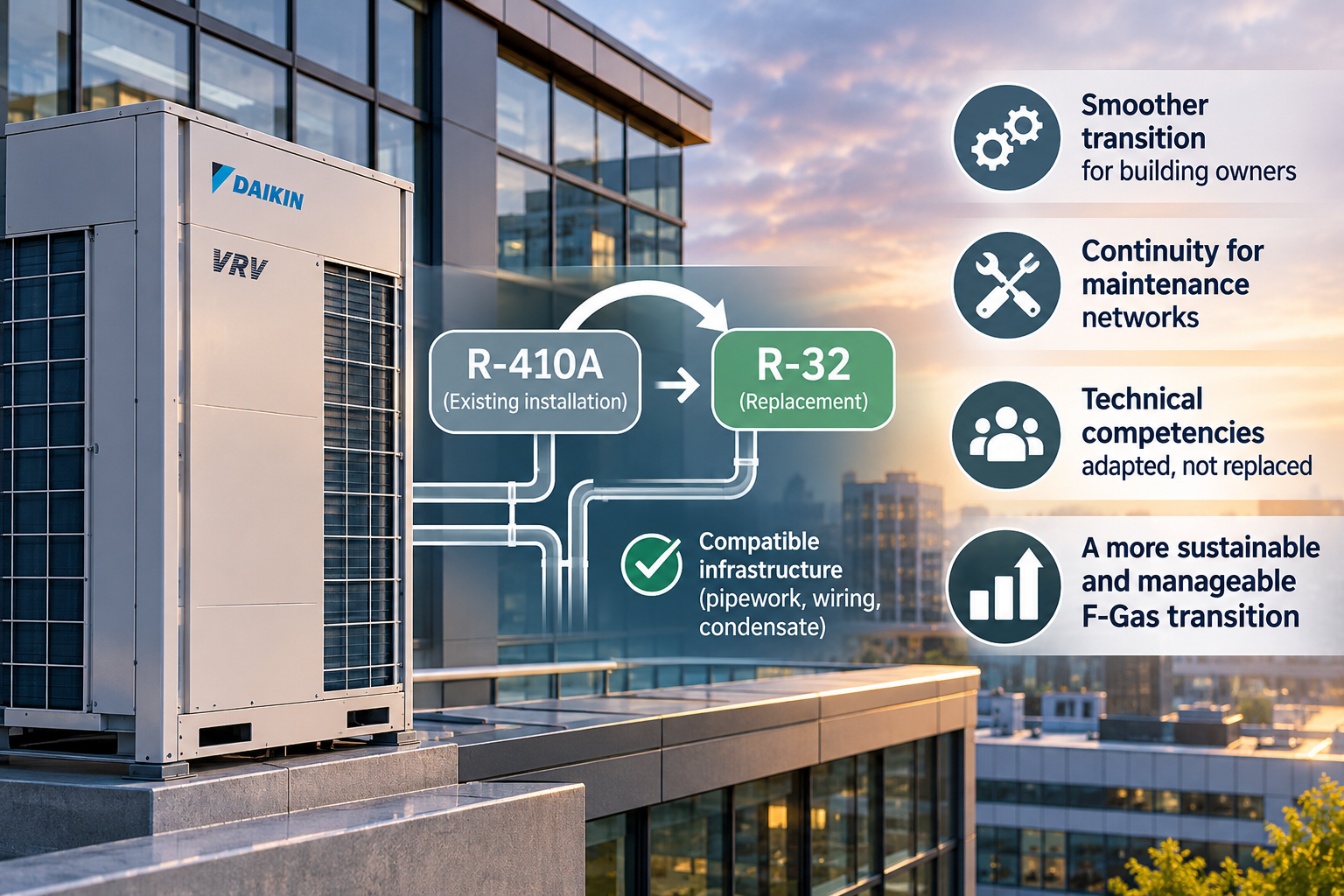
Daikin's recent announcement concerning the Mini VRV 5 S-series, allowing existing R-410A VRV/VRF systems to be replaced with R-32 equipment while retaining compatible infrastructure, is interesting beyond its technological dimension.
It illustrates how product development can address not only technological renewal but also the economic and operational continuity of the existing installed base.
Having followed Naofumi Takenaka's publications for some time, I see this announcement as consistent with other recent developments within Daikin, particularly in supply chain integration, portfolio expansion and after-sales services.
It also brings me back to a question I have raised repeatedly over the past six months: the structural impact of the F-Gas regulation on distribution and maintenance networks.
In applications such as VRV/VRF, equipment replacement is not a straightforward operation. It can involve significant investment, technical complexity and disruption to building operations.
Designing new equipment around compatibility with existing infrastructure could address two important challenges:
◼️ Reducing the economic and operational impact of the refrigerant transition for building owners.
◼️ Preserving continuity within existing maintenance networks, allowing service companies to adapt their technical competencies while retaining established customer relationships and knowledge of the installations.
This approach could become an important product development trend in a market where regulatory and technological change is progressing faster than some building owners and technical networks can economically and operationally adapt.