𝗛𝗲𝗮𝘁𝘄𝗮𝘃𝗲𝘀 𝗮𝗿𝗲 𝗶𝗻𝗰𝗿𝗲𝗮𝘀𝗶𝗻𝗴 𝘁𝗵𝗲 𝗲𝗹𝗲𝗰𝘁𝗿𝗶𝗰𝗶𝘁𝘆 𝗿𝗲𝗾𝘂𝗶𝗿𝗲𝗱 𝗳𝗼𝗿 𝗰𝗼𝗼𝗹𝗶𝗻𝗴.
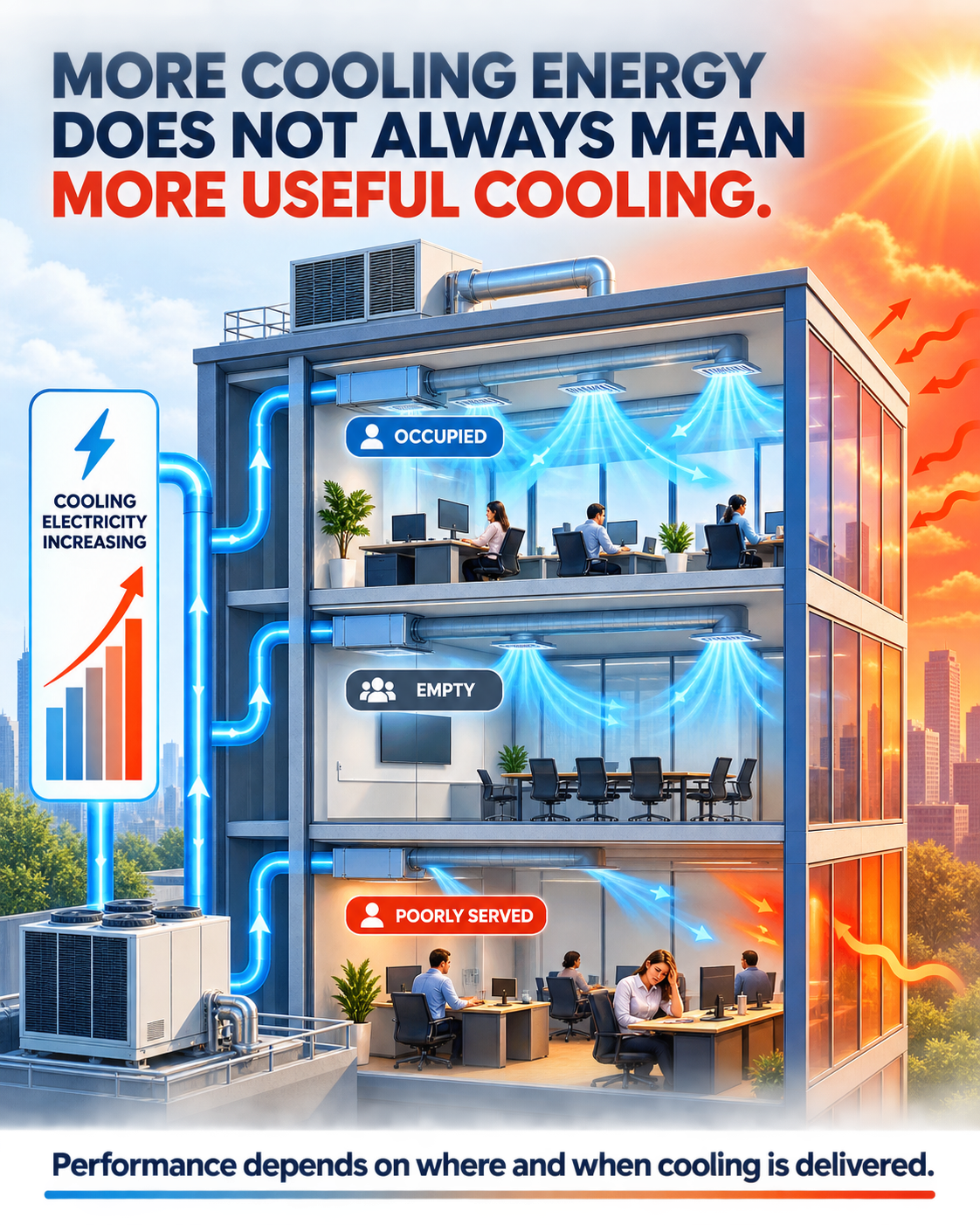
But higher consumption does not necessarily mean that buildings are being cooled effectively.
During extreme heat, an #HVAC system may consume more energy while continuing to:
▪️ condition empty areas;
▪️ maintain uneven temperatures across occupied zones;
▪️ provide ventilation that does not correspond to actual occupancy;
▪️ operate equipment independently of zoning and real demand;
▪️ reach its setpoints without delivering uniform comfort.
➡️ This distinction becomes increasingly important.
Energy consumption per square metre tells us how much energy a building uses in relation to its surface.
It does not tell us how effectively that energy is converted into thermal comfort and indoor air quality where people are actually present.
✔️ A lower kWh/m² may result from reduced occupancy.
✔️ A higher kWh/m² during a heatwave may be technically justified.
Neither figure, considered alone, demonstrates whether the #HVAC system is performing correctly.
A more complete assessment must also consider:
▪️ comfort during occupied hours;
▪️ energy use in active and inactive zones;
▪️ ventilation in relation to actual demand;
▪️ temperature differences between occupied spaces;
▪️ the coordination of sensors, zoning and control sequences.
➡️ Conventional energy indicators remain essential.
But as cooling demand grows, reducing consumption cannot be separated from improving how cooling is delivered.
➡️ This moves the analysis beyond equipment efficiency.
It brings design, air distribution, controls, commissioning and ongoing operation into the same performance assessment.
𝗗𝘂𝗿𝗶𝗻𝗴 𝗮 𝗵𝗲𝗮𝘁𝘄𝗮𝘃𝗲, 𝘁𝗵𝗲 𝗿𝗶𝗴𝗵𝘁 𝗾𝘂𝗲𝘀𝘁𝗶𝗼𝗻 𝗶𝘀 𝗻𝗼𝘁 𝘀𝗶𝗺𝗽𝗹𝘆 𝗵𝗼𝘄 𝗺𝘂𝗰𝗵 𝗲𝗻𝗲𝗿𝗴𝘆 𝗮 𝗯𝘂𝗶𝗹𝗱𝗶𝗻𝗴 𝗰𝗼𝗻𝘀𝘂𝗺𝗲𝘀.
It is how much useful cooling that energy actually delivers.
You should also read:

𝗢𝗻 𝗪𝗲𝗱𝗻𝗲𝘀𝗱𝗮𝘆, 𝗺𝘂𝗰𝗵 𝗼𝗳 𝗘𝘂𝗿𝗼𝗽𝗲 𝘄𝗮𝘀 𝘄𝗮𝘁𝗰𝗵𝗶𝗻𝗴 𝘁𝗵𝗲 𝗦𝘂𝗻.
Electricity system operators were watching the solar generation curve. Red Eléctrica had estimated an eclipse-specific reduction of approximately 5 GW in photovoltaic production. Hydroelectric and combined-cycle gas generation compensated for the decline. No significant grid incident was reported. In France, the observed reduction was considerably…
Continue reading...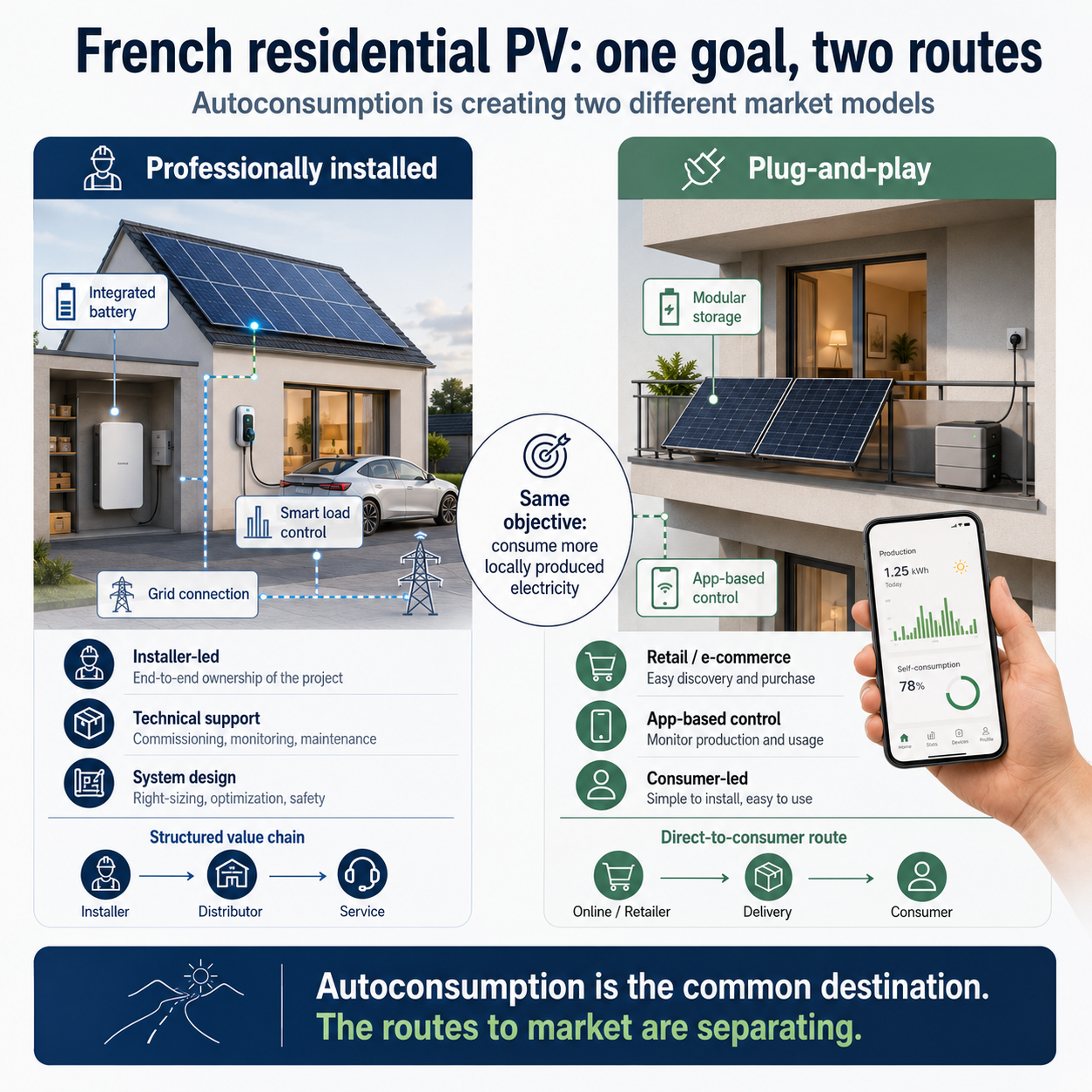
𝗧𝗵𝗲 𝗙𝗿𝗲𝗻𝗰𝗵 𝗿𝗲𝘀𝗶𝗱𝗲𝗻𝘁𝗶𝗮𝗹 𝗣𝗩 𝗺𝗮𝗿𝗸𝗲𝘁 𝗶𝘀 𝗶𝗻𝗰𝗿𝗲𝗮𝘀𝗶𝗻𝗴𝗹𝘆 𝗯𝗲𝗶𝗻𝗴 𝗱𝗲𝘀𝗶𝗴𝗻𝗲𝗱 𝗮𝗿𝗼𝘂𝗻𝗱 𝗮𝘂𝘁𝗼𝗰𝗼𝗻𝘀𝘂𝗺𝗽𝘁𝗶𝗼𝗻.
This changes more than the configuration of the installation. The traditional proposition was relatively linear: Panels, inverter, installation and grid connection. The emerging proposition includes load control, EV charging, batteries, dynamic tariffs and digital energy management. But this evolution is not creating one unified market.
Continue reading...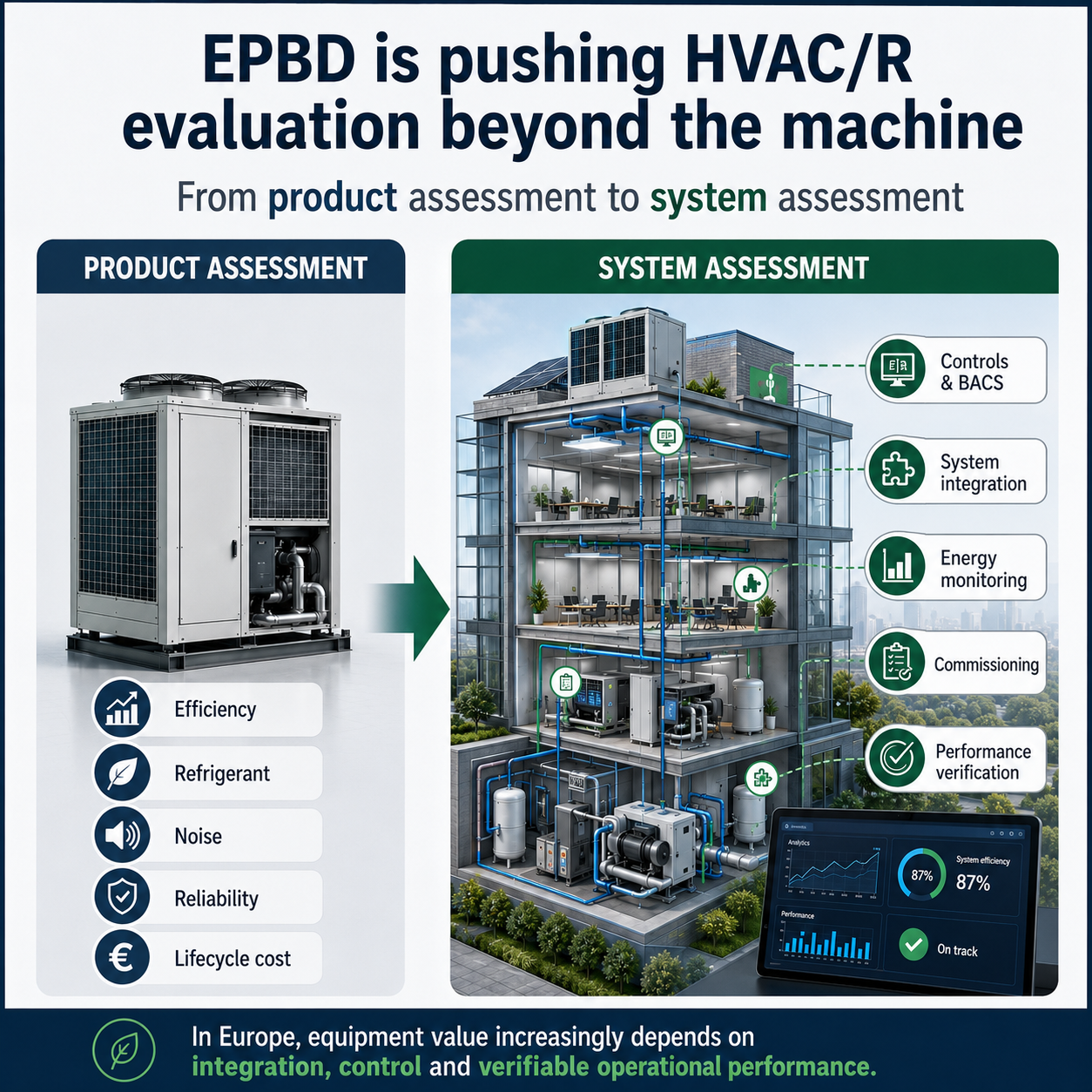
𝗔 𝗵𝗶𝗴𝗵-𝗲𝗳𝗳𝗶𝗰𝗶𝗲𝗻𝗰𝘆 𝗛𝗩𝗔𝗖/𝗥 𝗽𝗿𝗼𝗱𝘂𝗰𝘁 𝗰𝗮𝗻 𝘀𝘁𝗶𝗹𝗹 𝗯𝗲𝗰𝗼𝗺𝗲 𝗮 𝗹𝗼𝘄-𝗽𝗲𝗿𝗳𝗼𝗿𝗺𝗶𝗻𝗴 𝗯𝘂𝗶𝗹𝗱𝗶𝗻𝗴 𝗮𝘀𝘀𝗲𝘁.
This is one of the technical implications of the European building-performance framework. A heat pump, chiller or ventilation unit may offer: ▪️ high nominal efficiency ▪️ an appropriate refrigerant ▪️ low noise levels ▪️ reliable components ▪️ competitive lifecycle costs But none of these characteristics…
Continue reading...